
Free · runs on your device
Seasonal color analysis
Tap your skin, hair, and eye in a photo and get your seasonal color palette — undertone, depth, and contrast measured in Lab color space, not eyeballed. Your photo never leaves your browser.
CostFree
TimeUnder 1 min
SignupNone
DataStays on device
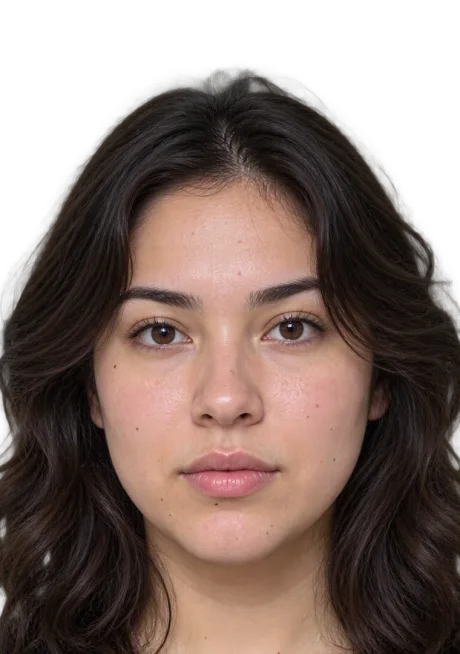
Tap-to-sample color read
Step 1 of 2 · your photo
Add a photo to sample
Daylight, no filter, natural hair color visible. You'll tap your skin, hair, and eye.
How it works
Add your photo
Camera or upload — either works.
Mapped in your browser
478 landmarks, entirely on your device.
Your measured result
Numbers and lines drawn on your photo.
On-device · never uploaded
Lab color measurement
Free · no signup
Step 1 of 3 · Tap your cheek or jawline (skip shadows and blush)
The science
How seasonal color analysis works
01
Seasonal color analysis sorts people by three attributes: undertone (warm or cool), depth (light or deep), and contrast (how far apart your skin, hair, and eyes sit in lightness). The combination maps to a season — warm + light = Spring family, cool + deep + high contrast = Deep Winter, and so on. Traditional analysts assess these by draping fabrics; this tool measures them from pixels you tap in your photo.
02
The measurements are done in Lab color space: your skin sample’s hue angle places you warm or cool, its ITA (individual typology angle) places depth, and the lightness gap between your skin and hair sets contrast. Tapping your own pixels beats an algorithm guessing regions, because you know which patch of cheek is actually clean of blush and shadow.
03
Full honesty: color seasons are a styling heuristic, not science — there is no peer-reviewed “season” in your skin. But the underlying measurements (undertone, depth, contrast) are real colorimetry, and the practical payoff is real too: palettes matched to undertone and contrast reliably look more harmonious than ones that fight them. Use the palette as a starting point, not a rulebook.
The 12 seasons, briefly
The four base seasons split by undertone and depth: Springs are warm and light, Autumns warm and deep, Summers cool and light, Winters cool and deep. Each splits into three by which quality dominates — a Bright Spring is a Spring whose contrast dominates, a Soft Autumn is an Autumn muted toward gray, a Deep Winter is a Winter whose darkness dominates. The tool measures your undertone and depth from skin pixels and your contrast from the skin-hair lightness gap, then places you in the nearest of eight core positions; borderline results genuinely belong to two neighboring seasons, and both palettes will work.
What a season buys you is a filter, not a rulebook: a palette of colors that share your undertone temperature and sit at your contrast level. Shopping inside it means individual pieces automatically harmonize with your face and with each other — the practical payoff professional analysts charge three figures for, measured here from three taps.
Draping vs. digital: an honest comparison
In-person analysts drape dozens of fabrics under controlled light and read how your face responds — shadows, brightness, evenness. That responsiveness test captures something pixel measurement cannot, and a skilled analyst also weighs eye pattern and preference. What pixel measurement does better: it is objective about undertone (the thing drapers most often disagree on between each other), free, repeatable, and immune to the lighting of whichever studio you walked into. Reasonable workflow: measure here first; if you land borderline between seasons and care about the distinction, that is exactly the case where a good in-person analyst earns their fee.
FAQ
Common questions
How do I find my color season?+
Determine undertone (warm/cool), depth (light/deep), and contrast (difference between your skin, hair, and eyes). This tool measures all three from taps on your photo — daylight and natural hair color visible give the truest result.
What if I dye my hair?+
Sample your natural color at the roots if any is visible, or your brows as a proxy. Dyed hair changes your effective contrast, so some people genuinely straddle two seasons depending on their current color.
Is color season analysis scientific?+
The season labels are a styling convention. The measurements underneath — undertone hue angle, ITA depth, lightness contrast — are standard colorimetry. Treat the season as a useful shortcut to a palette, not a fact about you.
Can my color season change?+
The underlying undertone almost never changes; depth and contrast do — with graying hair, significant tanning, or hair dye. Silver hair typically softens and cools a palette (many warm-deep types drift toward soft/cool seasons); a bleach-blonde dye job can move your effective contrast a full step.
What colors suit every season?+
A few near-universals sit at middle temperature and saturation: soft white (not optic white), medium navy, true teal, and blush-adjacent soft pinks test acceptably across most seasons. If you hate palettes, those are the safe defaults.
Does color season apply to makeup and hair too?+
Yes — it is arguably most useful there. Foundation undertone should match exactly, blush and lipstick follow your temperature (corals/warms vs berries/cools), and the hair color matcher on this site uses the same undertone logic for dye families.