Free calculator · no signup
Body Shape Calculator: What Body Shape Am I?
Enter your bust, waist and hips, in centimeters or inches, and this body shape calculator sorts them by FFIT’s published rules into hourglass, pear, apple, rectangle or inverted triangle, or one of the in-between shapes, draws your figure from your own numbers, and says what the shape means for styling. It asks for your high hip only when that decides the shape.
CostFree
TimeUnder 1 min
SignupNone
DataKept on device
Measure over light clothing or none, tape level and snug, not tight. The shapes are FFIT’s, a system built for women’s figures.
Units
Bust, fullest
cmWaist, narrowest
cmHips, widest
cmHigh hip
cmBust around the fullest part, waist at its narrowest, hips around the widest part of the buttocks. The high hip, around the top of the hip bones a few inches below the waist, only matters for some shapes: the calculator asks for it when it does.
Your body shape shows here as soon as bust, waist and hips are in.
Start your glow up
SkinPal on iPhone and Android
Next step · SkinPal app
Dress for your shape. SkinPal plans the rest.
Your shape sets the cuts that work. SkinPal builds your full glow up plan: styling, exercise, daily habits and skin care, reminds you every day, and shows you the change.
What you unlock in the app
- Full face analysisProportions, symmetry and skin, measured from one selfie
- Full skin report cardSee what's good and what needs work, from acne to skin age
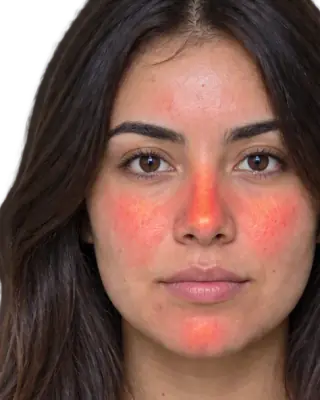
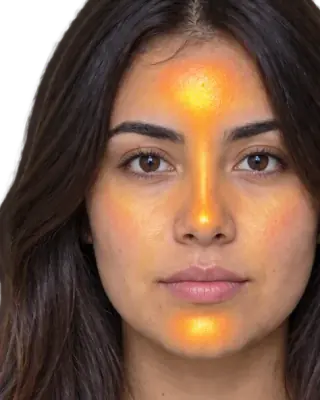
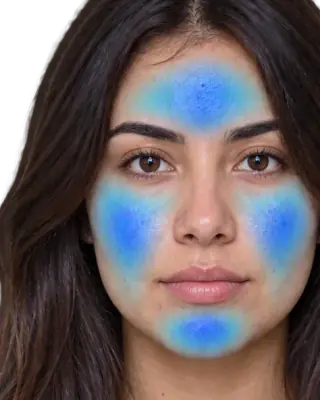
- Heatmaps of your faceSee exactly where redness, oil and breakouts are
- Flare, your AI skin coachAsk anything, get answers based on your own face
- Morning and night routineMade for you, and it changes as you improve
- Ingredient scannerKnow if a product suits you before you buy it
- Progress trackingSee your before and after, week by week
The science
How the body shape calculator works
01
This body shape calculator uses FFIT, the Female Figure Identification Technique, developed at North Carolina State University from 3D body scans (Simmons, Istook and Devarajan, Journal of Textile and Apparel, Technology and Management, 2004). It compares three tape measurements, bust, waist and hips, by how many inches apart they are, and adds a fourth, the high hip, only to tell a spoon from a bottom hourglass. The rules for seven shapes were published by Lee, Istook, Nam and Park in 2007, and the calculator applies them in their published order.
02
The five shapes people search for map onto FFIT like this: hourglass (with FFIT’s top hourglass and bottom hourglass), pear (FFIT’s triangle, and the spoon, a pear with a shelf at the high hip), rectangle, inverted triangle and apple. FFIT’s own round shapes, oval and diamond, need stomach and abdomen measurements, so this calculator has a simpler rule of its own for apple: a waist as large as the bust and the hips, or larger.
03
It is a sorting system, not a measurement of anything fixed. Measuring the same bodies at another sizing survey’s tape sites changed the shape in up to 40% of 1,679 3D scans (Parker et al., Ergonomics, 2021), and FFIT leaves out the shoulders. Measure at the spots below, twice, and read the result as the shape your numbers sit in.
Body shape types: hourglass, pear, apple, rectangle and inverted triangle
Each figure below is drawn from a set of measurements, the four under it, and the calculator sorts each set into the shape named: what you see is what the rules read. Your own result draws your figure from your tape beside the matching one.
Hourglass
Bust and hips about the same, with a clearly smaller waist.
36-26-37 in, high hip 32
Top hourglass
An hourglass with a fuller bust: a defined waist, more on top than at the hips.
38-28-35 in, high hip 32
Bottom hourglass
An hourglass with fuller hips: a defined waist and hips that curve out smoothly.
35-27-40 in, high hip 31
Pear (triangle)
Hips wider than the bust, with a waist that is not sharply defined.
34-31-39 in, high hip 35
Spoon
A pear with a shelf: the hips widen early, just below the waist, at the high hip.
34-28-40 in, high hip 35
Rectangle
Bust, waist and hips close to in line, with little waist definition.
36-31-37 in, high hip 34
Inverted triangle
Bust and shoulders wider than the hips, with a straighter waist.
40-33-35 in, high hip 34
Apple (round)
Fullest at the middle, with the waist as wide as the bust and hips.
40-41-40 in, high hip 41
The body shape rules, shape by shape
All differences are in inches, as FFIT publishes them. If you enter centimeters, the calculator converts first. The rules run in this order and the first one that fits is your shape, after the apple check.
| Shape | Rule |
|---|---|
| Apple (round) | The waist is as large as the bust and the hips, or larger. FFIT has no tape rule for this figure (its oval and diamond shapes need stomach and abdomen measurements), so this calculator checks it first. |
| Hourglass | The bust no more than 1 inch bigger than the hips and the hips less than 3.6 inches bigger than the bust, and the waist 9 or more inches smaller than the bust or 10 or more smaller than the hips. |
| Top hourglass | Bust more than 1 and under 10 inches bigger than the hips, and the waist 9 or more inches smaller than the bust. |
| Bottom hourglass | Hips at least 3.6 and under 10 inches bigger than the bust, the waist 9 or more inches smaller than the hips, and no shelf at the high hip (high hip ÷ waist under 1.193). |
| Pear (triangle) | Hips 3.6 or more inches bigger than the bust, and the waist less than 9 inches smaller than the hips. |
| Spoon | Hips more than 2 inches bigger than the bust, the waist 7 or more inches smaller than the hips, and a shelf at the high hip (high hip ÷ waist 1.193 or more). |
| Rectangle | Bust and hips within 3.6 inches of each other, the waist less than 9 inches smaller than the bust and less than 10 smaller than the hips. |
| Inverted triangle | Bust 3.6 or more inches bigger than the hips, and the waist less than 9 inches smaller than the bust. |
Two corners of the space fit no FFIT rule: a bust 10 or more inches over the hips with a defined waist, and hips 10 or more over the bust with a defined waist and no high hip shelf. The calculator names the nearest shape, top or bottom hourglass, and says the body is past FFIT’s range.
How to measure for the body shape calculator
Over light clothing or none, standing straight, feet together, the tape level and snug without pressing.
- Step 1Bust: around the fullest part of the chest, in the bra you usually wear, tape level across the back.
- Step 2Waist: at the narrowest point between the ribs and the hips, usually a little above the belly button. Breathe out normally; do not pull in.
- Step 3Hips: around the widest part of the buttocks. Move the tape up and down to find the largest number.
- Step 4High hip, when asked: around the top of the hip bones, a few inches below the waist, where the hips start to widen.
How to dress for your body shape
Styling advice is convention, not research: the stylist’s usual aim is balance, so that the eye reads the waist at its narrowest and the top and bottom of the body as even. Here is what that means shape by shape.
Hourglass (and top and bottom hourglass): Keep the waist visible and let clothes follow the curve. Wrap dresses, belted coats and high-waisted trousers mark the waist where it is narrowest. Fitted knits and stretch fabrics follow the line; boxy cuts hide the waist and add width. Top hourglass: V and scoop necklines; bottom hourglass: A-line and bootcut below a fitted top.
Pear (triangle) and spoon: Add width and interest above the waist, keep the lower half simple. Boat necks, structured shoulders, puff sleeves and lighter or patterned tops widen the top. Dark, plain bottoms in A-line skirts, wide-leg or bootcut trousers skim the hips. Spoon: start the skirt or trouser shape at the waist so it skims the high hip shelf instead of gripping it.
Apple: Draw the eye up and down, away from the middle. V necks and open collars lengthen the upper body; long open layers make a vertical line. Empire waists and tops that skim instead of cling give shape without pulling at the middle. Straight or slim-straight trousers show the legs, often the narrowest part.
Rectangle: Build curve at the waist, or lean into the straight line. Peplums, wrap tops and belts over a layer create a waist; ruffles or detail at bust and hips add curve. Straight, sharp tailoring, shift dresses and boyfriend cuts suit the line as it is. Cropped jackets and high-waisted bottoms set a waistline where you want it.
Inverted triangle: Soften the shoulders and add volume below the waist. V necks, raglan sleeves and darker, plain tops narrow the top half. A-line and pleated skirts, wide-leg trousers, prints and color below the waist widen the hips. Skip shoulder pads, boat necks and heavy detail at the shoulders.
Color works with the same aim: lighter and brighter draws the eye, darker recedes. The color season analysis finds the shades that suit your skin, hair and eyes, so you know which colors to put where you want attention.
Hourglass, pear or spoon: what the high hip decides
With hips well over the bust and a waist 9 or more inches under the hips, the high hip decides. Divide it by the waist: under 1.193 is a bottom hourglass, where the hips curve out smoothly; 1.193 or more is a spoon, where the hips step out right below the waist. A 28 inch waist makes the cut at a high hip of 33.4 inches.
That is why the calculator shows the high hip box but asks for it only when your other three numbers fall in that zone. For everyone else it changes nothing.
Which body shape is most common?
SizeUSA, the national sizing survey of 2003, scanned about 10,000 American adults. Sorted by FFIT, over half of the women aged 18 to 25 were rectangle, about 15% spoon and 12.5% hourglass; at 26 to 55, over 80% were rectangle, spoon or inverted triangle and 8% hourglass (Newcomb and Istook, 2006). The same study found the US Junior and Missy sizing standards cut for the hourglass at every size, a shape only 8 to 12.5% of those women had: its explanation for clothes that fit badly off the rack.
Those shares are American women scanned in 2003. Other countries sorted by the same rules come out in a different order (Lee et al. 2007 compared American and Korean women), so read them as one population, not a world average.
Body shape calculator for men
FFIT was built from women’s scans and sorts women’s figures; no male system with published tape rules was found, so this calculator covers the female shapes and does not guess at men’s. For a man, the measurable questions behind a body shape search are fat at the middle and muscle for his height: the waist to hip ratio calculator reads the first against the WHO cut-off, the body fat calculator turns a tape into body fat, and the FFMI calculator says how much muscle that leaves.
How reliable is a body shape calculator?
Two limits are worth knowing. First, the tape sites: when 1,679 3D scans were measured once at FFIT’s sites and once at the UK sizing survey’s, up to 40% of bodies changed shape (Parker, Hayes, Brownbridge and Gill, Ergonomics, 2021). Second, the rules are fixed inches, not proportions, so the same proportions sort differently at different sizes: 36-28-37 inches is a rectangle, 20% larger it is an hourglass.
So measure at the sites above, twice, and if you sit close to a line, read both neighbors. The shape is a styling shorthand; the waist to hip ratio calculator is the measurement health research uses.
FAQ
Common questions
What body shape am I?+
Measure your bust, waist and hips in inches and compare them. Hips 3.6 or more inches bigger than the bust: pear, or bottom hourglass if your waist is 9+ inches smaller than your hips, or spoon with a shelf at the high hip. Bust 3.6+ inches bigger than the hips: inverted triangle, or top hourglass with a waist 9+ inches under the bust. Bust and hips close with a waist 9+ inches smaller than the bust: hourglass. Otherwise rectangle, and a waist as big as both is apple. The calculator does the comparison for you, in centimeters or inches.
Am I a triangle or an hourglass?+
If your hips are 3.6 or more inches bigger than your bust, FFIT reads the waist: 9 or more inches smaller than the hips is a bottom hourglass (with no shelf at the high hip) or a spoon (with one), and less than 9 inches is a triangle, the pear. A full hourglass needs the bust and hips within an inch or so of each other.
What is the most common body shape?+
In SizeUSA, the national sizing survey that scanned about 10,000 American men and women in 2003, FFIT sorted over half of women aged 18 to 25 as rectangle, about 15% as spoon and 12.5% as hourglass. At 26 to 55, over 80% were rectangle, spoon or inverted triangle, and 8% hourglass (Newcomb and Istook, 2006).
Which is the rarest body shape?+
The SizeUSA study ranked the four main shapes as rectangle, spoon, inverted triangle, then hourglass, which was 12.5% of women aged 18 to 25 and 8% of those aged 26 to 55. It did not publish shares for the smaller shapes, so there is no measured answer for the very rarest.
What is the difference between a pear and a spoon body shape?+
Both have hips bigger than the bust. A spoon has a shelf at the high hip: the high hip, around the top of the hip bones, is 1.193 or more times the waist, so the hips widen right below the waist. A pear widens more gradually. That is the one place the calculator needs a high hip measurement.
What is the unhealthiest body shape?+
A shape is an outline, not a health measure. What the health research measures is fat at the waist: the World Health Organization puts a substantially increased risk of metabolic complications at a waist to hip ratio of 0.85 or more in women and 0.90 in men. An apple by this calculator’s rule, a waist at least as large as the hips, is a ratio of 1.0 or more.
Is there a body shape calculator for men?+
FFIT, the system used here, sorts women’s figures, and no male system with published tape rules was found, so this calculator covers the female shapes. For men, the waist to hip ratio and the FFMI calculator measure what a male body shape search is usually after: fat at the middle, and muscle for your height.
Can my body shape change?+
Yes. FFIT’s rules are fixed inches, not proportions, so a body that grows or shrinks can change shape on paper. A figure of 36-28-37 inches is a rectangle (bust 8 inches over the waist, one short of the hourglass rule); the same proportions 20% larger, 43.2-33.6-44.4, are an hourglass. Weight change rarely keeps proportions, either: where you gain and lose sets the new differences.
Keep going
Waist to hip ratio calculator →
Your waist to hip ratio against the WHO cut-off for men and women, and what your waist alone reads.
Color season analysis →
Your 12-season color palette from a selfie.
Body fat calculator →
Your body fat percentage from a tape measure (US Navy method), with its error, the healthy range for your age and a drawn body fat chart.