
Free · runs on your device
Am I Ugly? Face Test From a Photo
Upload one photo and this am I ugly test gives you a straight answer from your measured facial geometry: a score from 1 to 10, the band it falls in, and the four measurements behind it. It answers "how ugly am I?" with numbers you can check instead of a guess, and it runs on your device, so your photo is never uploaded.
CostFree
TimeUnder 1 min
SignupNone
DataStays on device
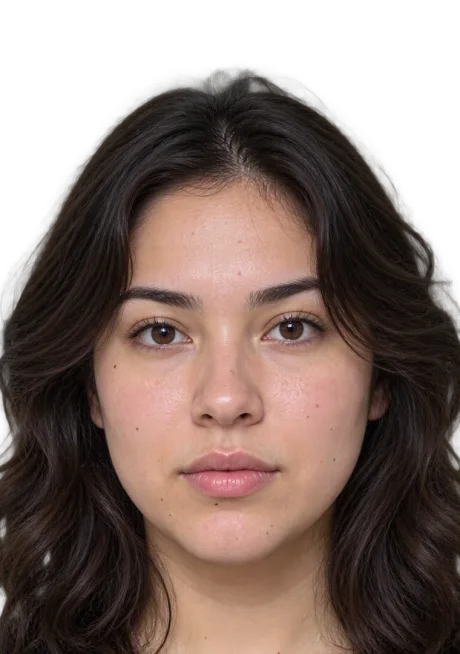
478-point landmark map
Step 1 of 2 · your photo
Add a photo to measure
Face the camera straight on, hair off the face, even light, no tilt.
How it works
Add your photo
Camera or upload, either works.
Mapped in your browser
478 landmarks, entirely on your device.
Your measured result
Numbers and lines drawn on your photo.
On-device · never uploaded
478 landmarks
Free · no signup
The science
Am I ugly? What the test measures
01
Ugly has no measurement, but the geometry people react to does, and that is what this test reads. It finds 478 points on your face and scores your symmetry, the balance of your facial thirds, your facial fifths and your face length to width. The answer comes from where that score falls against the range most faces land in.
02
The four parts add up to a harmony score out of 100, weighted 35%, 25%, 25% and 15%, the same score the attractiveness test reports. It is shown on a 1 to 10 scale, the same number as the pretty scale test, where an average face reads 4.9 and most photos land between 4.2 and 6.0.
03
What the test leaves out matters: skin, hair, body fat, grooming, style and expression. Those change how people see a face as much as geometry does, and none of them are in the number. So the answer covers bone structure and proportion, and the result says so.
Am I ugly test: how to take it
The am I ugly test needs one clear, front-facing photo and under a minute. The photo is read in your browser and is never uploaded.
- Step 1Take or upload a photo facing the camera: lens at eye level and at arm’s length, chin level, mouth relaxed, hair pulled back from your face and light falling evenly on both sides.
- Step 2The test maps 478 points on your face and measures symmetry, thirds, fifths and length to width. It takes a few seconds and happens on your device.
- Step 3Read the answer: your score from 1 to 10, its band, the range most faces land in, and the four measurements with their weights. The one furthest below 100 with the biggest weight is the part costing you the most points.
If the answer surprises you, take a second photo the same way. Two photos with the same setup land within about half a point of each other; when they do not, the setup is the variable.
Ugly to attractive scale: what each score means
The answer comes from five bands of the harmony score, the same bands the attractiveness test uses. Balanced harmony and above answers no; the two bands below it say how far under the usual range the measurement sits.
| Score | Band (harmony) | The answer |
|---|---|---|
| 7.4 to 9.4 | Exceptional harmony (88 and up) | No. Every measured part sits near its classical target at once, which few faces do. |
| 6.1 to 7.3 | High harmony (80 to 87) | No. Your geometry measures above the range most faces land in. |
| 4.2 to 6.0 | Balanced harmony (68 to 79) | No. This is the band most faces land in. |
| 2.1 to 4.1 | Mixed geometry (55 to 67) | Below the usual range, usually because one measurement, most often symmetry, pulls the rest down. |
| 1.0 to 2.0 | Distinctive geometry (below 55) | Well below the usual range: the proportions sit far from the classical targets. |
Each band has its own range on the 1 to 10 scale, with no overlap: 6.0 is balanced harmony and 6.1 is high harmony, because harmony is a whole number and each point moves the score by about 0.16. Your result shows the harmony score behind the number as well.
Distinctive geometry describes distance from classical targets, not how a face looks to people. Plenty of faces that are called striking or beautiful sit far from those targets.
How ugly am I? Why one photo is not the whole answer
One photo measures your geometry at one angle, one distance and in one light, and all three move the result. A phone held close to your face enlarges the nose and the middle of the face: a 2018 study in JAMA Facial Plastic Surgery found a selfie taken about 30 cm away makes the nose look around 30% wider than a photo from 1.5 m. Tilting your chin up shortens your lower third, and light from one side makes the two halves of your face read differently and lowers the symmetry score.
The other reason is familiarity. You know your face from the mirror, which shows it flipped, and no face is perfectly symmetric, so an unflipped photo looks slightly wrong to you even when it looks normal to everyone else. A 1977 study found people preferred their own mirror image while their friends preferred the true photo. The true mirror shows you the unflipped version.
So treat one photo as one reading. Take two or three the same way, at arm’s length with the camera at eye level, and trust the reading they agree on.
What makes a face read as attractive
Research on facial attractiveness keeps finding the same few things: symmetry, averageness (how close a face is to the typical face of its population), sex-typical features, and skin that looks even and healthy. A 2006 review by Gillian Rhodes in the Annual Review of Psychology summarizes the first three. This test measures symmetry and proportion; it does not measure averageness or skin.
The parts that change are mostly the ones outside the score. Skin evenness responds to a consistent routine over weeks; hair and brows change how wide or long a face reads; body fat changes how defined the jaw and cheekbones look; posture and a relaxed expression change how a face reads in photos and in person.
The SkinPal app covers the skin part: it scans your skin from a selfie and tracks it week by week, so you can see whether a routine is working. For the same geometry framed as a question of looks, the pretty scale test gives your score with its tier, and the attractiveness test gives it out of 100.
FAQ
Common questions
Am I ugly?+
This test answers for the part a photo can measure. If your harmony score is 68 or more (balanced, high or exceptional harmony), the answer is no: your geometry sits where most faces land, or above. Below 68 the result says how far below the usual range you are and which measurement is responsible, most often symmetry, which head tilt and uneven light pull down.
Am I ugly or average?+
Most faces measure as average. Balanced harmony, 4.2 to 6.0 on the 1 to 10 scale, is the band most well-lit, straight-on photos fall in, and the test answers no for it. An average face reads 4.9.
How ugly am I on a scale of 1 to 10?+
The test gives you that number from one photo. An average face reads 4.9 and most photos land between 4.2 and 6.0. Below 4.2 is under the usual range and 2.0 or less well under it, and the four measurements behind the number show which part of your geometry sets it.
Is the am I ugly test accurate?+
It is repeatable for what it measures: the same photo gives the same answer, and photos taken the same way land within about half a point of each other. It is more often wrong about photos than about faces. A close lens, a tilted head or light from one side lowers the score, mostly through symmetry, so retake a low result before you trust it.
Why do I look ugly in photos?+
Mostly distance and familiarity. A phone held close to your face enlarges your nose and midface, which is not how anyone sees you at a normal distance. And a photo shows your face unflipped, the way others see it, which looks slightly wrong to you because you know your face from the mirror.
Can I change my score?+
Not the bone geometry, short of surgery. What does move the number is the photo: a level camera at arm’s length and even light give the true reading. What moves how people see your face is mostly outside the number: skin, hair, brows, body fat, posture and expression.
Is my photo uploaded?+
No. The face model runs in your browser, the photo stays on your device, and nothing about your face is sent to a server.
Keep going
Pretty scale test →
Am I pretty? Your face rated 1 to 10 on the pretty scale, from measured symmetry and proportions.
Attractiveness test →
How attractive am I? A face rating from measured geometry, out of 100 and on the 1 to 10 scale.
AI skin analysis →
Redness, tone evenness, shine and depth from one selfie, scored in your browser.