
Free · runs on your device
Eyebrow mapping tool
Your brow start, arch, and end points — the three-point system brow artists map with string — computed from your landmarks and drawn on your photo.
CostFree
TimeUnder 1 min
SignupNone
DataStays on device
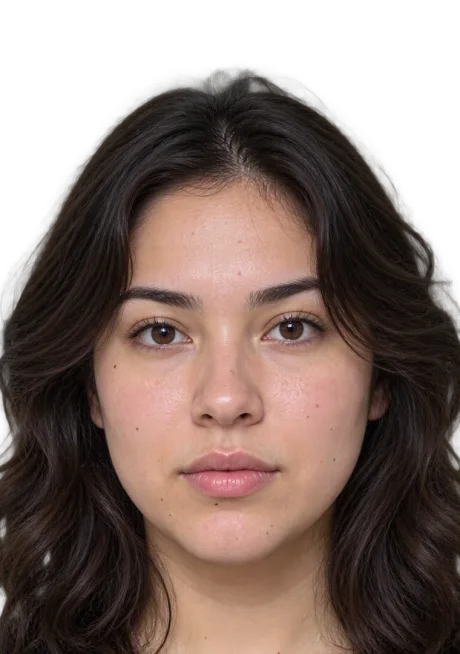
478-point landmark map
Step 1 of 2 · your photo
Add a photo to map
Straight on, brows visible (no fringe), relaxed face. The three classic points get drawn on your photo.
How it works
Add your photo
Camera or upload — either works.
Mapped in your browser
478 landmarks, entirely on your device.
Your measured result
Numbers and lines drawn on your photo.
On-device · never uploaded
Start · arch · end points
Free · no signup
The science
The three-point brow map, measured instead of eyeballed
01
Brow artists map three points before touching a hair: the start (vertically above the nostril wing), the arch (on the line from nostril wing through the pupil), and the end (on the line from nostril wing through the outer eye corner). The system exists because these lines anchor the brow to your specific eye and nose positions — which is why copying someone else’s brow shape onto your bone structure so often reads wrong.
02
This tool finds those anchor points from your measured landmarks and draws the three rays directly on your photo, per side — no string, no pencil, no eyeballing. Small left-right differences in the mapped points are normal (your two brows are sisters, not twins, because your two face halves are). Groom toward the map gradually: over-plucked brows can take months to grow back, and the map will still be there next week.
Eyebrow shapes, and which the map supports
The mapped anchor points define where a brow starts, peaks, and ends — the shape between those points is the style decision. Straight brows (minimal arch, favored in East Asian beauty) flatten the peak toward the line between start and end and read youthful and soft. Soft-arch brows lift a few millimeters at the mapped arch point — the safest default across face shapes. High-arch brows exaggerate the same peak for drama and lift, and suit round and full faces best. Tapered vs. thick is independent of arch: current fashion runs fuller and brushed-up, but thickness fashion cycles roughly a decade, which is a reason to keep your removal conservative.
Whatever the style, the map is the guardrail: start hairs before the start line get cleaned up, the peak belongs at the pupil ray rather than drifting toward the tail, and the tail ends on the outer-corner ray. Styles change the curve between anchors; moving the anchors themselves is what makes brows read "off" for your face.
Using the map: grooming order of operations
Screenshot your mapped photo, then work in this order: brush hairs up and trim only the tips that extend far past the brow’s upper line; remove obvious strays well below the lower line and between the start points; leave everything within a few millimeters of the map for a week and re-check — brows read differently after the initial cleanup, and the most common regret is chasing symmetry hair by hair. Fill lightly toward the mapped tail rather than extending past it, and match your two brows to their own map sides, not to each other: they anchor to slightly different halves of your face by design.
FAQ
Common questions
Where should my eyebrows start and end?+
Start: vertically above the nostril wing. End: on the line from nostril wing through the outer corner of your eye. Ending short visually widens the face; extending past the line drags the eye downward.
Where should the arch of my eyebrow be?+
On the line from the nostril wing through your pupil — your natural peak. Arches placed further out toward the tail create the perpetually-surprised look.
Why are my two mapped brows slightly different?+
Because your two face halves are slightly different — everyone’s are. Brow artists work to the "sisters, not twins" standard; forcing perfect symmetry against asymmetric anatomy reads more off, not less.
How do brow artists map eyebrows?+
With a thread or pencil held from the nostril wing: vertical for the start, through the pupil for the arch, to the outer eye corner for the end — then dots and a string line before any hair removal. This tool computes the same three rays from your measured landmarks.
My brows grow past the mapped end point — trim them?+
If the tail extends past the outer-corner ray and drags downward, shortening to the map typically lifts the whole eye area. If it extends but stays level, it is a style choice — long level tails read elegant, long drooping tails read tired.
Are eyebrow maps different for men?+
Anchor points are identical — the rays are anatomy, not gender. The difference is styling: masculine grooming usually keeps the natural thickness and a flatter arch, cleaning only clear strays outside the mapped frame.