
Free · runs on your device
Skin undertone test
Warm, cool, neutral, or olive — measured from your skin pixels in Lab color space, not guessed from wrist veins. Your photo never leaves your browser.
CostFree
TimeUnder 1 min
SignupNone
DataStays on device
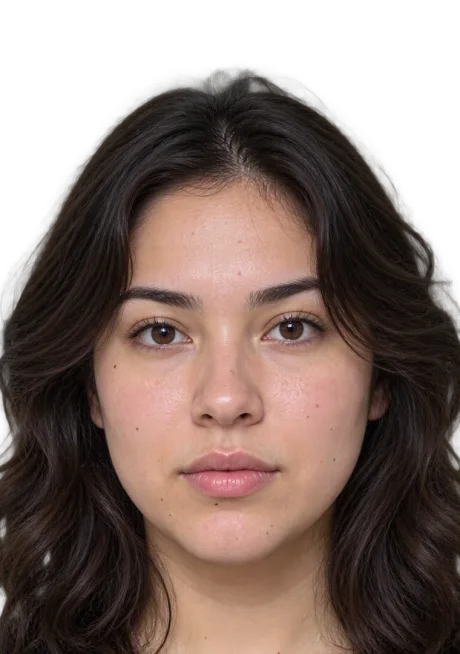
Tap-to-sample color read
Step 1 of 2 · your photo
Add a photo to sample
Daylight near a window, no filter, no makeup — jawline and neck give the truest read.
How it works
Add your photo
Camera or upload — either works.
Mapped in your browser
478 landmarks, entirely on your device.
Your measured result
Numbers and lines drawn on your photo.
On-device · never uploaded
Lab hue-angle math
Free · no signup
Tap 2–5 points on your jawline, neck, or cheek — skip shadows and blemishes.
The science
How undertone is measured — beyond the vein trick
01
Undertone is the hue beneath your surface skin color: golden-peach (warm), pink-rose (cool), balanced (neutral), or the frequently missed green-gray cast of olive. It is independent of depth — fair skin can be warm, deep skin can be cool — and it decides which foundations, hair colors, jewelry metals, and clothing colors harmonize with you.
02
Folk methods — wrist veins, jewelry comparisons — are guesses filtered through lighting and memory. This tool measures instead: your sampled skin pixels are converted to Lab color space, where the hue angle between the red-green and yellow-blue axes locates your undertone, and low chroma with a yellow-green lean flags olive — the undertone the vein test misclassifies most.
03
Everything runs in your browser; the photo is never uploaded. Lighting is still the main error source, so shoot facing indirect daylight and sample the jawline or neck, where surface redness interferes least.
Olive: the undertone the old tests miss
The vein test, the jewelry test, and the white-paper test all force a warm-or-cool binary — which is exactly why olive-undertoned people bounce between wrong foundations for years. Olive is a low-chroma undertone with a subtle green-gray cast: warm foundations turn orange on it, cool ones turn pink, and both look "off" in a way the wearer can see but the binary tests cannot name. Measured in Lab color space, olive shows as high hue angle WITH low chroma — which is precisely what this tool checks. If you have ever been told you are warm by one method and cool by another, you are likely olive, and the muted/neutral shade families are your fix.
FAQ
Common questions
What is the difference between skin tone and undertone?+
Tone (depth) is how light or deep your skin is; undertone is the hue beneath it — warm, cool, neutral, or olive. Foundation shades encode both, which is why matching depth alone still produces a shade that looks off.
How do I know if I have an olive undertone?+
Olive reads as a subtle green-gray cast: foundations look too orange or too pink, gold and silver both seem just okay, and very warm or very cool colors feel slightly wrong. Measured, olive shows as low chroma with a yellow-green hue — exactly what this tool checks.
Is the vein test accurate for undertone?+
Only loosely. Vein color depends on skin depth, vein depth, and lighting as much as undertone, and it has no answer for neutral or olive. Pixel measurement in controlled light is considerably more repeatable.
Is the vein test for undertones accurate?+
Only at the extremes. Vein color depends on skin depth and vein depth as much as undertone — deep skin reads veins dark regardless, and olive skin reads ambiguous. Pixel measurement in Lab space is checking the actual quantity the vein test gestures at.
Can I have different undertones on face and body?+
Slightly, yes — sun exposure warms the face and forearms relative to the torso. The jawline-neck measurement this tool suggests is chosen because it is the boundary foundation must match.