
Free · runs on your device
Hunter Eyes Test: Do I Have Hunter Eyes?
Upload one photo and this hunter eyes test measures the three parts of the look a photo can see: how close your brow sits to your lash line, how narrow your eye opening is, and your canthal tilt. Each is compared with 313 measured faces and scored from prey eyes to hunter eyes, out of 100. Your photo is never uploaded.
CostFree
TimeUnder 1 min
SignupNone
DataStays on device
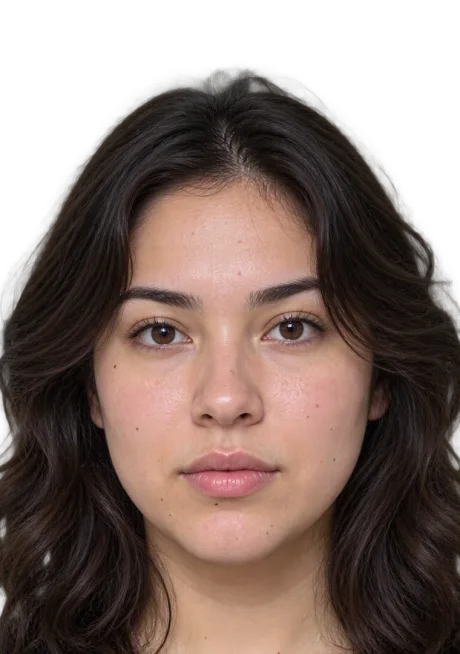
478-point landmark map
Step 1 of 2 · your photo
Add a photo to measure
Face the camera straight on, hair off the face, even light, no tilt.
How it works
Add your photo
Camera or upload, either works.
Mapped in your browser
478 landmarks, entirely on your device.
Your measured result
Numbers and lines drawn on your photo.
On-device · never uploaded
478 landmarks
Free · no signup
The science
What are hunter eyes?
01
Hunter eyes is a looksmaxxing term for one eye configuration: a brow that sits low over a mostly covered upper lid, an eye opening that is long and narrow rather than round, and a canthal tilt that is level or rising toward the outer corner. Together they give the deep, focused look the term is named for. Prey eyes is the opposite end: a rounder, more open eye with visible lid under a higher brow.
02
It is not a medical term, and no study defines it. The parts it bundles are measured in eye research under their own names: brow position, upper lid show, palpebral fissure height and width, and palpebral fissure inclination (canthal tilt). This test measures the three of them a front photo can see and scores how far toward hunter your eyes sit.
Do I have hunter eyes? How the test decides
The test finds 478 points on your face and takes three measurements from each eye, then averages the two eyes. Brow to lash line: the distance from the lower edge of your brow to your upper lash line, in eye widths, which is how much room the lid has to show. Eye opening: the height of the opening divided by its width. Canthal tilt: the angle from the inner to the outer corner of the eye.
Each measurement is compared with 313 front-facing photos of public figures, 159 men and 154 women, measured with the same face model, so a reading becomes "smaller than 72% of faces" instead of a raw number. The hunter score weights them: brow to lash line 45%, eye opening 35% and canthal tilt 20%. A low brow and a narrow opening carry the score because they are what makes the lid look covered and the eye look deep; the tilt only has to be level or upward, and a negative tilt never reads hunter.
The reference faces agree with published eye research. Their median canthal tilt is +3.8° in men and +6.3° in women, against +4.7° and +7.0° measured in 300 adults (Vasanthakumar et al., North American Journal of Medical Sciences, 2012). Their brow sits closer to the lash line in men (0.53 eye widths) than in women (0.57), in line with men showing less upper lid than women in a study of celebrities from People magazine’s beauty lists (Evans et al., Plastic and Reconstructive Surgery Global Open, 2021).
Hunter eyes test: how to take it
The hunter eyes test takes under a minute and needs one clear photo of your face from the front. The photo is read in your browser and is never uploaded.
- Step 1Take or upload a front-facing photo: camera at eye level, about arm’s length away, head straight, eyes looking into the lens, brows relaxed and a neutral mouth. Hair off your forehead so the brows show.
- Step 2Wait a few seconds while the test maps your face and measures the brow to lash line distance, the eye opening and the canthal tilt of both eyes.
- Step 3Read your hunter score out of 100, its band, and the three measurements behind it, each with where it falls among the 313 reference faces.
Raising your brows is the fastest way to lose points: it opens the lid and widens the gap to the lash line. Take two photos the same way and compare them; if they land in different bands, the photo setup is the variable, not your eyes.
Hunter score chart: what each band means
The bands split the 313 reference faces into roughly a fifth at each end and three tenths in each middle band, so a score in the 40s or 50s is the normal result.
| Score | Band | Share of faces | What it means |
|---|---|---|---|
| 65 to 100 | Hunter eyes | About 1 in 5 | Low brow over the lid, a narrow opening and a level or upward tilt, all at once. |
| 50 to 64 | Leaning hunter | About 3 in 10 | Most of the configuration, with one part closer to typical. |
| 36 to 49 | Leaning prey | About 3 in 10 | One or more parts read open or lifted. Also where a negative tilt caps the result. |
| 0 to 35 | Prey eyes | About 1 in 5 | A rounder, more open eye with visible lid under a higher brow. |
For each measurement, the middle half of faces reads 0.49 to 0.61 eye widths from brow to lash line, 0.28 to 0.34 for the eye opening and +3.0° to +6.7° of canthal tilt. Readings below the first two ranges and above the third push the score toward hunter.
Hunter eyes vs prey eyes
The two terms describe the ends of one range. Hunter eyes look out from under the brow: little lid shows, the opening is long and narrow, and the outer corner sits level with or above the inner one. Prey eyes look open: lid shows between brow and lashes, the opening is rounder, and the outer corner is often level or lower. The reference chart shows hunter, almond, round, upturned, downturned and hooded eyes side by side.
Most eyes sit between the ends. The score shows where, and the three measurements show why: a face can have a hunter-style low brow and a prey-style round opening, which reads Leaning hunter or Leaning prey depending on how far each goes. The eye shape detector names the shape of the opening on its own.
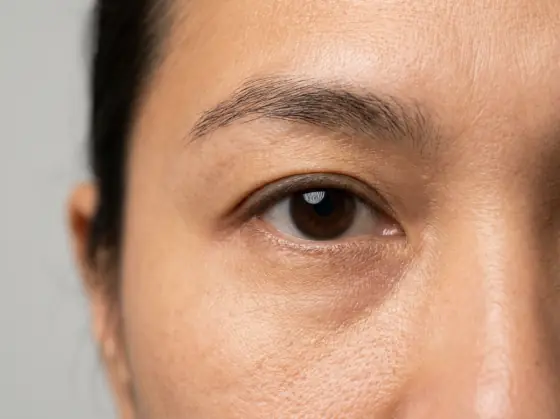
Hunter
Deep set under the brow bone, upward outer corner, little visible lid
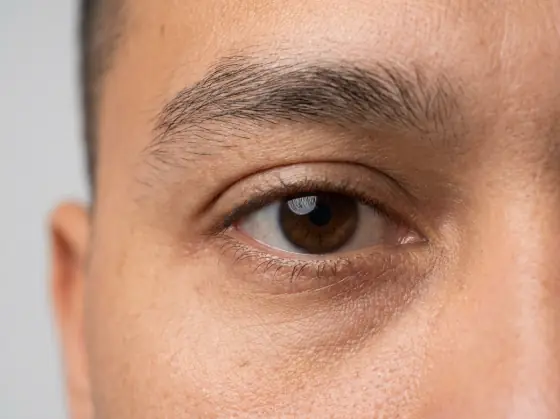
Almond
Slight upward tilt, moderate opening, lid visible
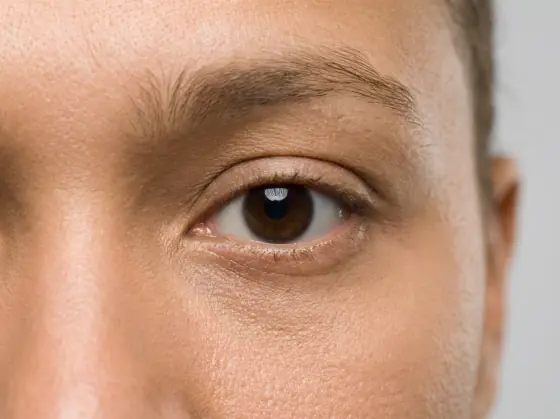
Round
Tall opening, white visible above and below the iris
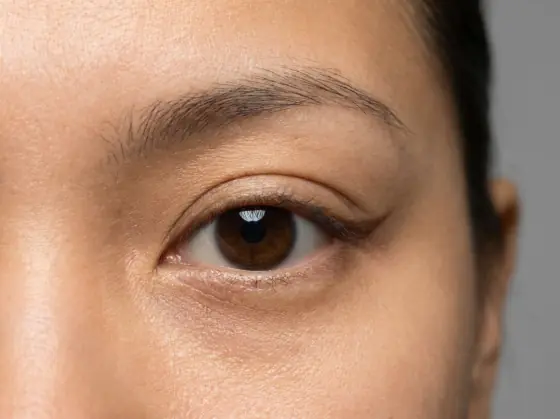
Upturned
Outer corner clearly higher than the inner corner
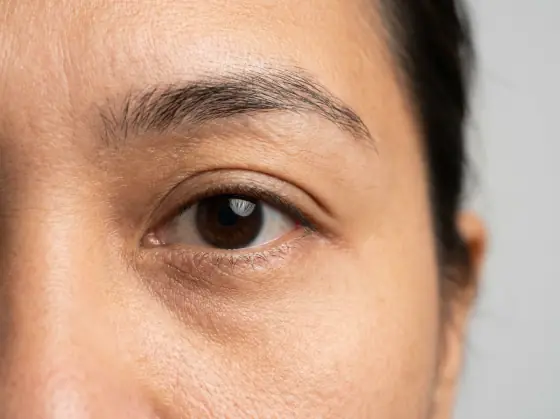
Downturned
Outer corner lower than the inner, so the line slopes down
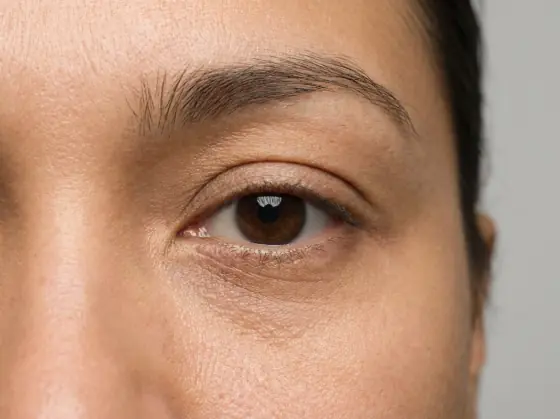
Hooded
Upper fold covers the crease and most of the mobile lid
How to get hunter eyes, and what actually changes
The parts the score measures are set by bone and soft tissue. Brow bone projection stops changing in the late teens, the lid crease is set by how the lid muscle attaches, and the shape of the opening is set by the lid margins and the orbit. Eye exercises, mewing and squinting drills do not change any of them in adults, and most before and after photos online are lighting from above, a lower camera and a slight squint.
What you can change is how they read. Brows groomed straighter and slightly lower sit closer to the lash line; a relaxed brow in photos instead of a raised one does the same; enough sleep keeps the lids from looking puffy. Each part also has a procedure, from brow bone contouring to blepharoplasty or canthoplasty, and those are decisions for an oculoplastic or craniofacial surgeon, one feature at a time. The hunter eyes guide covers where the term came from and when a covered lid becomes hooding.
FAQ
Common questions
Do I have hunter eyes?+
Upload one straight-on photo and the test answers on a 0 to 100 hunter score: 65 and up reads Hunter eyes, 50 to 64 Leaning hunter, 36 to 49 Leaning prey and 35 or less Prey eyes. About one face in five reads Hunter eyes. The score comes from how close your brow sits to your lash line, how narrow your eye opening is and your canthal tilt, each compared with 313 measured faces.
What is the difference between hunter eyes and prey eyes?+
Hunter eyes have a low brow over a mostly covered lid, a long, narrow opening and a level or upward tilt. Prey eyes are rounder and more open, with visible lid under a higher brow, and often a flat or downward tilt. Most people sit between the two, which is why this test gives a score and four bands instead of a yes or no.
Can you get hunter eyes naturally?+
Not with exercises, and not in a week or a month. Brow bone, lid crease and the shape of the eye opening are set by bone and soft tissue, and eye exercises, mewing and squinting drills do not change them in adults. What does change how hunter your eyes look: brows groomed lower and straighter instead of arched, a relaxed brow instead of raised brows in photos, enough sleep to keep lids from looking puffy, and light from slightly above. Procedures exist for each part separately, from brow bone contouring to canthoplasty, and are decisions for a surgeon.
What is the difference between hooded eyes and hunter eyes?+
Where the lid fold sits. Hunter eyes show little upper lid, but the lash line stays visible. Once the fold of skin under the brow rests on or over the lash line, the eye is hooded: it reads smaller and heavier, and eyeliner disappears when the eye opens. A low brow pushes both ways, so a hunter score at the very top can come from mild hooding; check in a mirror whether your lash line shows.
Do humans have hunter eyes or prey eyes?+
In the animal sense, every human has predator eyes: both eyes face forward, which gives the overlap that judges distance, while prey animals have eyes on the sides of the head to see around them. The looksmaxxing terms borrow the words for something else: how much lid shows, how narrow the opening is and the canthal tilt. On those, most people sit between the two ends.
What is the most attractive eye shape for men?+
Studies of attractive faces point toward the hunter end for men: men on People magazine’s beauty lists showed less upper lid than the women (2.5 mm against 3.9 mm, Evans et al., 2021), and in a study of 126 Italian adults chosen at beauty competitions against 199 others, the attractive group of both sexes had longer, more upward-tilted eye openings set closer together (Sforza and colleagues, University of Milan). None of that is a rule: plenty of faces rated attractive have open, round eyes.
Can women have hunter eyes?+
Yes, but fewer women than men read that way. Among the 313 reference faces, 29% of the men and 12% of the women scored Hunter eyes. Women on average show more upper lid and have higher brows and a stronger upward tilt; the upward tilt counts toward hunter, the open lid counts against it. A female face with a low, straight brow and a narrow, lifted eye reads hunter here, the look often called fox or siren eyes.
How accurate is the hunter eyes test?+
The same photo always gives the same score. Two different photos of you can differ by several points, and what moves it is the photo: raised brows, a smile that pushes the lower lid up, a tilted head and a lens held close all change the measurements. It cannot see how far your brow bone projects or where your lid crease sits, which is part of the hunter look, so it scores the three parts a front photo can measure.
Is positive canthal tilt the same as hunter eyes?+
No. Canthal tilt is one part of hunter eyes, and the smallest one in this score (20%). Most faces already have a positive tilt: the middle half of the reference faces sits between +3.0° and +6.7°. The brow to lash line distance (45%) and the narrow opening (35%) do more to separate hunter from prey. The canthal tilt test on this site measures the tilt on its own.
Is my photo uploaded?+
No. The face model runs in your browser and your photo stays on your device. Nothing about your face is sent to a server.