
Free · runs on your device
Mog Battle: Who Mogs Who?
Add your photo, then theirs, and this mog battle tells you who mogs who in under a minute: both faces scored on the same facial harmony out of 100, side by side and part by part, with a mog called only when the gap beats what two photos of the same face differ by. Both photos are measured on your device, and their photo is never saved or uploaded.
CostFree
TimeUnder 1 min
SignupNone
DataStays on device
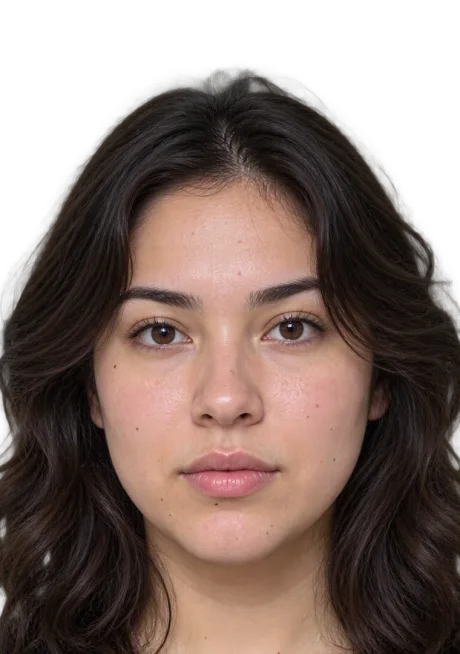
478-point landmark map
Step 1 of 3 · your photo
Your photo first
Face the camera straight on, level, at arm’s length, in even light. This one is you: it is the photo your full report is built from.
How it works
Add your photo
Camera or upload, either works.
Mapped in your browser
478 landmarks, entirely on your device.
Your measured result
Numbers and lines drawn on your photo.
On-device · never uploaded
Same harmony as the attractiveness test
Free · no signup
?Their photo next
?Their photo next
Both photos are measured on this device. Their photo is never saved or uploaded: only the two scores stay in your result.
The science
What is a mog battle?
01
A mog battle is a head-to-head looks comparison: two faces side by side and one question, who mogs who. To mog someone is to outshine them when you stand next to each other. The word comes from AMOG, alpha male of the group, and the mogged meaning guide covers where it came from. On forums and streams, a mog battle is settled by a vote.
02
This mog battle settles it with a measurement. Both faces are mapped with 478 landmarks and scored on the facial harmony the attractiveness test uses: symmetry (35% of the score), the balance of the facial thirds (25%), facial fifths (25%) and face length to width against the golden ratio (15%). The higher score mogs only when the gap is 6 points or more, because smaller gaps turn up between two photos of the same face.
Who mogs who? How the mog battle decides
Each face gets a harmony score out of 100, and the battle compares the two whole numbers. The verdict depends on the gap alone: under 6 points is too close to call, 6 to 13 points is a mog, and 14 or more is a hard mog. The four parts are compared too, so you can see where the gap comes from.
The 6 point margin is measured, not picked. In our tests, 170 front-facing photos were each measured in 9 versions that a second photo of the same face could be: as taken, rotated 2° either way, at half the resolution, cropped tighter, cropped off one side, cropped off the top, mirrored, and saved as a lower-quality JPEG. The same photo always scores the same. Between two versions of one photo, the score moved by 5 or more points in 9.3% of 6,074 pairs and by 6 or more in 4.4%, so 6 is the smallest gap one face reaches against itself less than 1 time in 20.
The hard mog line comes from real pairs of faces. Among the 167 public figures in that set, 47% of all pairs sit 6 or more points apart and 9.4% sit 14 or more apart, so a hard mog is a gap that about 1 pair of faces in 10 reaches.
| Gap | Verdict | Share of face pairs | What it means |
|---|---|---|---|
| 0 to 5 | Too close to call | About 5 in 10 | Inside what two photos of the same face can differ by. Neither face mogs. |
| 6 to 13 | Mog | About 4 in 10 | Bigger than one face differs from itself 19 times in 20: the higher score mogs. |
| 14 or more | Hard mog | About 1 in 10 | A gap about 1 pair of faces in 10 reaches. |
The shares are for pairs of the 167 reference faces, all straight-on photos. Photos taken at different angles land further apart, which is what the photo check on the result is for.
Mog battle 1v1: how to take it
A 1v1 mog battle takes about a minute and needs one front-facing photo of each face. Both photos are read in your browser and never uploaded.
- Step 1Add your photo first: camera at eye level, about arm’s length away, head level, a neutral face, hair off your forehead and even light from the front. Your result, and your full report if you want one, are built from this photo.
- Step 2Add their photo, taken the same way. A saved photo works if it is straight on and level. It is measured on your device and never saved or uploaded.
- Step 3Read the verdict: both harmony scores, the gap against the 6 point margin, each part side by side with who leads it, and both faces on the 1 to 10 and PSL scales.
The result names any photo tilted 4° or more, or with the face turned to one side, because either can cost as many points as the whole margin. Retake that photo before you trust the verdict.
Mog calculator: the four parts behind the score
The mog calculator behind the battle is the facial harmony score, worked out the same way for both faces. Symmetry compares six mirrored pairs of points across the midline of the face, from the corners of the eyes to the edges of the jaw. Thirds compares the height from the brows to the base of the nose with the height from there to the chin. Fifths checks how evenly the width of the face splits into five bands about one eye wide. The golden ratio part compares face length with face width.
Each part is scored out of 100 and weighted, so a part is worth its weight times its difference: a symmetry score of 88 against 67 is worth 0.35 × 21 = 7.4 points of harmony. Each part also has its own margin, measured the same way as the 6 point one, and it only counts as a lead past that margin. Inside it, the part reads even.
| Part | Weight | Leads at | What it measures |
|---|---|---|---|
| Symmetry | 35% | 13+ points | Six mirrored pairs of points across the midline, from the eye corners to the jaw. |
| Thirds balance | 25% | 9+ points | Brows to nose base against nose base to chin. |
| Facial fifths | 25% | 9+ points | How evenly the face width splits into five eye-wide bands. |
| Golden ratio (L/W) | 15% | 9+ points | Face length to face width against the classical proportion. |
Symmetry needs the biggest gap to count because it moves most between photos: a small head tilt changes it before any other part. The face symmetry test and the golden ratio face test measure two of these parts on their own.
Why the photo decides most mog battles
The harmony score reads the positions of points on a flat image, so anything that moves those points moves the score, and tilt moves them most. In our tests, rotating the same photo 4° changed its score by 6 points at the median, the whole margin, and rotating it 8° changed it by 13 to 15.
A head turned to one side does the same. Among the reference photos with a level eye line, faces looking straight at the camera scored 79 at the median, faces turned slightly scored 74 and faces turned further scored 66. Those are different people rather than one face turned, but the score drops further at every step of the turn.
| Change to the photo | Score change | Measured on |
|---|---|---|
| Same photo again | 0 points | 170 photos |
| Lower-quality JPEG | 0 points at the median | 170 photos |
| Half the resolution | 1 point at the median | 170 photos |
| Cropped tighter, or off one side or the top | 1 point at the median | About 170 photos each |
| Mirrored, as front cameras save it | 1 point at the median | 170 photos |
| Rotated 2° | 3 points at the median | 170 photos |
| Rotated 4° | 6 points at the median | 170 photos |
| Rotated 8° | 13 to 15 points at the median | 170 photos |
| Face turned slightly to one side | 5 points lower at the median | 54 turned against 124 straight photos |
| Face turned further | 13 points lower at the median | 48 turned against 124 straight photos |
So take both photos the same way: arm’s length, lens at eye level, head level, looking into the lens. The result flags a photo tilted 4° or more, or a face turned to one side, and says which photo to retake.
Mog face: do I mog?
"Do I mog?" only has an answer against someone, because mogging is a comparison. Against a friend, run the battle with both photos. Against faces in general, the attractiveness test places your harmony score on its bands. For reference, the 167 public figures this battle was calibrated on scored 78 at the median in straight-on photos, with the middle half between 74 and 81.
The result also puts both faces on the 1 to 10 scale of the pretty scale test and the 1 to 8 scale of the PSL score test, so a battle of 78 against 71 also reads 5.8 against 4.7 out of 10, and PSL 5.0 against 4.0. For a straight answer about your own face alone, the am I ugly test reads the same score band by band.
Mog face also means an expression: the narrowed eyes and set jaw people pull in mog photos. The battle is built for a relaxed, neutral face, because an expression moves the points the score is measured from, such as the corners of the mouth and eyes. Use the same neutral face in both photos so the battle compares faces, not expressions.
Height mog and frame mog: what a face photo can’t measure
Height mog and frame mog are about the body, not the face. To height mog someone is to stand noticeably taller next to them; to frame mog them is to have the wider shoulders and the bigger build. A front photo of a face carries neither, so this battle does not score them.
The same goes for everything else the face score leaves out: skin, hair, grooming, body fat and style. They change who looks better in a real side-by-side, and none of them are in the number. Skin is the one SkinPal measures over time: the app scans it from a selfie and tracks it week by week.
FAQ
Common questions
Who mogs who?+
Add both photos and the battle answers with numbers: each face gets a facial harmony score out of 100, and the higher one mogs when the gap is 6 points or more. A gap of 14 or more is a hard mog. Under 6 is too close to call, because gaps that small turn up between two photos of the same face.
How do I check if I mog?+
Run a mog battle with your photo and theirs, both straight on and level. If your harmony score beats theirs by 6 points or more, you mog them; by 14 or more, you hard mog them. Against faces in general, the attractiveness test places your score on its bands, and the public figures this battle was calibrated on scored 78 at the median.
What does "who mogs" mean?+
It asks which of two people looks better side by side. To mog is to outshine someone next to you, from AMOG, alpha male of the group. Who mogs who is the same question about one specific pair, usually asked under two photos placed side by side.
Is there a mog battle AI?+
This battle uses a face landmark model, MediaPipe, to find 478 points on each face, then a fixed formula on those points. No model guesses who looks better: the same two photos always give the same verdict, and every number behind it is on the result.
How do I mog someone?+
In a photo, by taking it better: level, at arm’s length, lens at eye level, looking into the lens and lit from the front. Rotating a photo 4° moved its harmony score by 6 points at the median in our tests, the whole margin. Outside the photo, the score reads bone structure, which does not change in adults; skin, hair, grooming and body fat are the parts you can change.
How accurate is the mog battle?+
The same photos always give the same result. Different photos of one face move the score: across 6,074 pairs of slightly changed versions of 170 photos, the score differed by 6 or more points in 4.4% of pairs, which is why a mog needs a 6 point gap. Tilted or turned photos move it far more, and the result says when one of yours is.
Is their photo saved or uploaded?+
No. Both photos are measured in your browser and neither is uploaded. Their photo is never saved: only the two scores stay in your result. Your own photo stays on your device, where it can build your full report.
Keep going
Attractiveness test →
How attractive am I? A face rating from measured geometry, out of 100 and on the 1 to 10 scale.
PSL score test →
Your measured facial geometry placed on the 1 to 8 PSL scale, with the full tier chart.
Pretty scale test →
Am I pretty? Your face rated 1 to 10 on the pretty scale, from measured symmetry and proportions.
Am I ugly test →
Am I ugly? A straight answer from your measured facial geometry, scored 1 to 10.