
Free · runs on your device
Monk skin tone finder
Find where you sit on the 10-point Monk Skin Tone scale — the inclusive-beauty standard — measured from your skin pixels, never uploaded.
CostFree
TimeUnder 1 min
SignupNone
DataStays on device
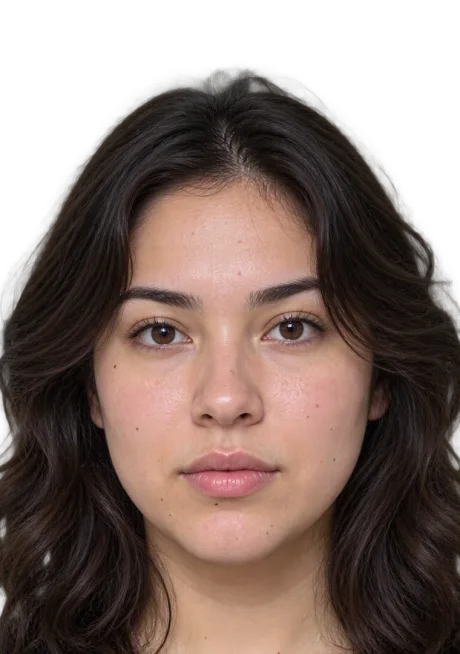
Tap-to-sample color read
Step 1 of 2 · your photo
Add a photo to sample
Daylight, no filter, no makeup. You'll tap a few points on your skin.
How it works
Add your photo
Camera or upload — either works.
Mapped in your browser
478 landmarks, entirely on your device.
Your measured result
Numbers and lines drawn on your photo.
On-device · never uploaded
Monk 10-point scale
Free · no signup
Tap 2–5 points on your cheek, jawline, or forehead — skip shadows and blemishes.
The science
The Monk scale, and why it replaced older skin-tone scales
01
The Monk Skin Tone (MST) scale is a 10-point scale developed by Dr. Ellis Monk with Google, designed to represent the full range of human skin tones more evenly than the older 6-point Fitzpatrick scale — which was built to predict sunburn, not to describe tone, and compresses most deep skin into two categories.
02
This tool averages the skin points you tap, converts them to Lab color space, and finds the nearest MST swatch by color distance. Lighting shifts the result a tone in either direction, so daylight without filters gives the truest read. MST is increasingly used in beauty tech and inclusive product development — knowing yours is genuinely useful vocabulary.
Why a 10-point scale matters
The Fitzpatrick scale that preceded Monk in tech was built for sunburn dosing — it compresses the world’s deeper skin tones into two categories, which is why camera systems and beauty AI trained against it historically underperformed on dark skin. The Monk scale allocates its ten points evenly across the human range, and Google adopted it for fairness-testing camera and search products. Knowing your MST is increasingly practical: inclusive beauty brands spec shade ranges against it, and it is the vocabulary fairness reports are written in. For picking foundation, pair it with the undertone test — MST is depth-only by design.
FAQ
Common questions
What is the Monk Skin Tone scale used for?+
Fairness testing in camera and AI systems, inclusive shade-range development in beauty, and research — anywhere a more even representation of skin tones than Fitzpatrick matters.
How is Monk different from Fitzpatrick?+
Fitzpatrick is a sun-reactivity scale from dermatology (how easily you burn); Monk is a tone-representation scale. Fitzpatrick compresses deeper tones; Monk allocates its 10 points evenly across the range.
Is my photo uploaded?+
No — sampling and matching run in your browser; the photo never leaves your device.
What Monk tone is "medium" skin?+
Roughly MST 4–6 — but the scale’s point is retiring vague words like medium. Two people who both say "medium" routinely measure two tones apart; the swatch match is the answer.
Is Monk skin tone used in beauty products?+
Increasingly — inclusive-range launches now cite MST coverage, and shade-matching tools at several retailers map to it internally. It is becoming the lingua franca between your skin and a shade wall.