
Free checker · no signup
Pore Clogging Checker: Does It Clog Pores?
Paste any ingredient list and every ingredient comes back marked clogs, may clog or does not clog, with where the flag comes from: a published rabbit-ear score or an acne-clinic list. It reads 140 ingredients from those sources under 446 names, in your browser.
CostFree
TimeUnder 1 min
SignupNone
DataKept on device
Runs in your browser. Nothing is uploaded.
Start your glow up
SkinPal on iPhone and Android
Next step · SkinPal app
A list knows the ingredient. SkinPal knows your skin.
Scan a label with your phone and SkinPal checks the product against your skin before you buy it. Then it measures your breakouts from a selfie and tracks them week by week, so you see whether a new product is clogging you.

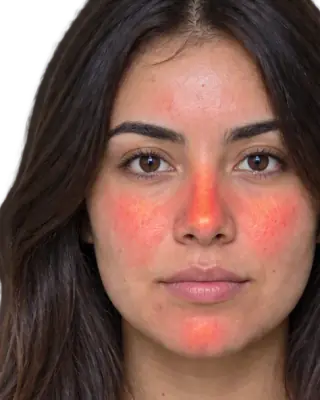
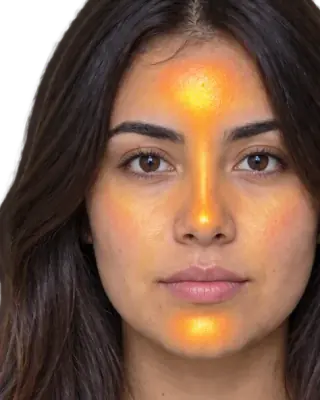
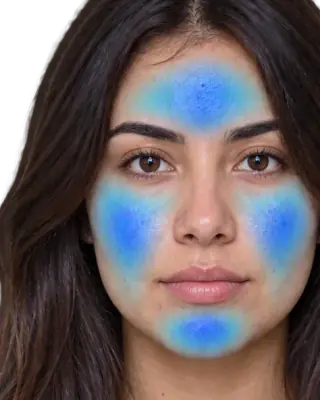
What you unlock in the app
- Ingredient scannerKnow if a product suits you before you buy it
- Full face analysisProportions, symmetry and skin, measured from one selfie
- Full skin report cardSee what's good and what needs work, from acne to skin age
- Heatmaps of your faceSee exactly where redness, oil and breakouts are
- Flare, your AI skin coachAsk anything, get answers based on your own face
- Morning and night routineMade for you, and it changes as you improve
- Progress trackingSee your before and after, week by week
The science
What are pore clogging ingredients?
01
A pore clogging ingredient is one that helps plug a hair follicle with oil and dead skin, which is how a blackhead or whitehead starts. The plug is a comedo, so the technical word is comedogenic. Kligman and Mills named the problem acne cosmetica in 1972: low-grade acne from what people put on their skin. The usual suspects are oily: esters such as isopropyl myristate, coconut and wheat germ oil, cocoa butter, acetylated lanolin, some emulsifiers, and seaweed extracts.
02
Two kinds of evidence sit behind every pore clogging list. The first is a published score from the rabbit-ear assay: the ingredient goes on a rabbit's ear and the plugs it causes are graded 0 to 5. James Fulton's 1989 tables in the Journal of the Society of Cosmetic Chemists are the source most lists trace back to, and Fulton read his own scale this way: 0 to 1 not significant, 2 to 3 borderline, and only 4 to 5 reproducible enough to count as positive. The second is the acne-clinic list: estheticians and acne clinics publish yes or no lists of ingredients to avoid, and some names on them, most algae and the newer exotic butters, were never scored at all.
03
This checker keeps the two apart. It knows 140 ingredients from those lists and tables under 446 names, INCI and botanical spellings included, and answers for each ingredient you paste: Clogs for a score of 4 or 5, May clog for a borderline score of 2 or 3 or a clinic flag with no score, Does not clog for a score of 0 or 1, and Not flagged for anything in neither source. A flag is a reason to look closer, not proof: the assay tested raw ingredients on rabbits, not finished products on faces.
How to use the pore clogging checker
This pore clog checker answers one question for every ingredient on a label: does it clog pores? It takes under a minute and runs in your browser, so the list you paste is not sent anywhere.
- Step 1Copy the full ingredient list from the back of the pack or the product page. Paste all of it, headings such as "Ingredients:" included; the checker splits it at the commas.
- Step 2Tap Check. Every ingredient comes back in label order, marked Clogs, May clog, Does not clog or Not flagged, with the source behind each flag and the name it matched on.
- Step 3Read the top of the list first. US and EU labels list every ingredient above 1% in descending order of amount (FDA 21 CFR 701.3, EU Cosmetics Regulation 1223/2009), so a flag in the first few places matters more than one after the preservatives.
It reads the Latin and the common names: Theobroma Cacao (Cocoa) Seed Butter is caught as cocoa butter, and Butyrospermum Parkii (Shea) Butter as shea butter. Whole names only, so laureth-40 is not mistaken for laureth-4, and coconut water is not mistaken for coconut oil.
Clogs, may clog or does not clog: where each answer comes from
Most pore clogging checkers print one list and mark everything on it as a clogger. That treats a measured 5 and a name a clinic added with no test behind it as the same claim. This checker gives every flag its source and reads the score the way the scientist who published it did.
| Answer | When | Source |
|---|---|---|
| Clogs | Published score 4 or 5 | Fulton 1989: reproducible, counted as positive |
| May clog | Published score 2 or 3 | Fulton 1989: borderline |
| May clog | On acne-clinic lists, never scored | Clinic pore clogging lists; no assay behind it |
| Does not clog | Published score 0 or 1 | Fulton 1989: not significant |
| Not flagged | In neither source | Lowers the odds; not a promise |
The scores are measurements on rabbit ears of raw ingredients, not finished products on faces, so even a 5 is a reason to patch test rather than a verdict on a product. A score of 2 is where lists disagree: some, our comedogenic checker among them, read 0 to 2 as low risk, while Fulton himself called 2 to 3 borderline. This checker follows Fulton, says may clog and shows the number, so you can decide.
Pore clogging checker vs comedogenic rating
A comedogenic rating is the number, 0 to 5, from the assay. A pore clogging checker answers the question people actually ask, does this clog, and that is what this page does. The two use the same ingredient data on this site. If you want every score grouped by chemistry, esters, oils, butters and the rest, the comedogenic checker lists them, and it also checks the list for fungal acne triggers.
If your bumps are small, even and itchy, they may be fungal acne rather than clogged pores, and the ingredients that feed it are a different list: run the same label through the fungal acne safe checker. If they started within weeks of a new retinoid or acid, the purging or breakout test tells the two apart.
The pore clogging ingredients list
All 140 ingredients the checker knows, sorted by its answer rather than by chemistry: 44 clog, 92 may clog (46 on a borderline score, 46 on clinic lists with no score) and 4 do not clog, listed because people ask about them. Each shows its published score, or "no score" when only clinics flag it.
Clogs pores (44)
Published rabbit-ear score of 4 or 5, the range Fulton (1989) called positive.
- Algae extract5/5
- Carrageenan5/5
- Coal tar5/5
- Isopropyl isostearate5/5
- Isopropyl linoleate5/5
- Isopropyl myristate5/5
- Laureth-45/5
- Myristyl myristate5/5
- Oleth-35/5
- Sodium chloride5/5
- Sodium lauryl sulfate5/5
- Wheat germ acid5/5
- Wheat germ oil5/5
- Xylene5/5
- Acetylated lanolin4/5
- Acetylated lanolin alcohol4/5
- Cetyl acetate4/5
- Cocoa butter4/5
- Coconut acid4/5
- Coconut oil4/5
- Disodium monooleamido PEG-2 sulfosuccinate4/5
- Ethylhexyl palmitate4/5
- Flaxseed oil4/5
- Isocetyl alcohol4/5
- Isocetyl stearate4/5
- Isodecyl oleate4/5
- Isopropyl isodecanoate4/5
- Isopropyl lanolate4/5
- Isopropyl palmitate4/5
- Isostearic acid4/5
- Isostearyl isostearate4/5
- Lauric acid4/5
- Myreth-3 myristate4/5
- Myristyl alcohol4/5
- Myristyl lactate4/5
- Myristyl propionate4/5
- Oleyl alcohol4/5
- Palm kernel oil4/5
- Palm oil4/5
- PEG-16 lanolin4/5
- Polyglyceryl-3 diisostearate4/5
- PPG-2 myristyl ether propionate4/5
- Steareth-104/5
- Stearyl heptanoate4/5
May clog: borderline score (46)
Published score of 2 or 3, which Fulton called borderline.
- Avocado oil3/5
- Butyl stearate3/5
- Ceteareth-203/5
- Colloidal sulfur3/5
- Corn oil3/5
- Cottonseed oil3/5
- D&C Red 303/5
- D&C Red 363/5
- Decyl oleate3/5
- Dioctyl succinate3/5
- Disodium laureth sulfosuccinate3/5
- Ethylhexyl stearate3/5
- Glyceryl stearate SE3/5
- Hydrogenated vegetable oil3/5
- Isostearyl neopentanoate3/5
- Lanolin alcohol3/5
- Laureth-233/5
- Mink oil3/5
- Myristic acid3/5
- Oleic acid3/5
- Oleth-53/5
- PEG-200 dilaurate3/5
- PEG-8 stearate3/5
- Shark liver oil3/5
- Shea butter3/5
- Sodium laureth sulfate3/5
- Sorbitan oleate3/5
- Soybean oil3/5
- Sulfated castor oil3/5
- Sulfated jojoba oil3/5
- Almond oil2/5
- Apricot kernel oil2/5
- Beeswax2/5
- Cetearyl alcohol2/5
- Cetyl alcohol2/5
- D&C Red 172/5
- D&C Red 212/5
- D&C Red 32/5
- Evening primrose oil2/5
- Lanolin2/5
- Olive oil2/5
- Palmitic acid2/5
- Peanut oil2/5
- Sesame oil2/5
- Stearic acid2/5
- Vitamin E oil2/5
May clog: on clinic lists, never scored (46)
Acne clinics list these as pore cloggers, but no assay score was ever published.
- Agarno score
- Andiroba seed oilno score
- Avocado butterno score
- Babassu oilno score
- Beef tallowno score
- Bismuth oxychlorideno score
- Borage oilno score
- Brazil nut oilno score
- Brown algae and kelpno score
- Buriti oilno score
- Carrot seed oilno score
- Cherry seed oilno score
- Chlorellano score
- Chullu seed oilno score
- Coconut alkanesno score
- Cranberry seed oilno score
- Diatom extractno score
- Green algaeno score
- Hydrogenated olive oilno score
- Jojoba butterno score
- Jojoba waxno score
- Kapok oilno score
- Lauroyl lysineno score
- Magnesium myristateno score
- Mahua seed oilno score
- Mango butterno score
- Marula oilno score
- Moringa oilno score
- Murumuru butterno score
- Olive butterno score
- Olive oil PEG-7 estersno score
- Palash oilno score
- Palm butterno score
- Papaya seed oilno score
- PEG-40 hydrogenated castor oilno score
- Pequi oilno score
- Pilu oilno score
- Pine nut oilno score
- Polysorbate 80no score
- Rapeseed oilno score
- Red algaeno score
- Sapote butterno score
- Spirulinano score
- Sunflower butterno score
- Sweet almond butterno score
- Tucuma butterno score
Does not clog (4)
Published score of 0 or 1, which Fulton read as not significant. Listed because people ask about them.
- Hydrogenated castor oil1/5
- Lanolin oil1/5
- Squalene1/5
- Argan oil0/5
What does non pore clogging mean?
"Non pore clogging" and "non-comedogenic" on a label are the maker’s claim. No US rule defines either term or sets a test for it. Some makers test the finished product on human skin, others only leave out listed ingredients, and the label does not say which. That is why a product sold as non-comedogenic can still contain a borderline ingredient, and why reading the ingredient list yourself is the only check you control.
For a product you already own, the American Academy of Dermatology’s test for anything new is a quarter-sized spot, twice a day for 7 to 10 days. That catches irritation and allergy. Clogging shows where the product goes, so if you clog easily, try a flagged product on one area of your face before the whole of it.
FAQ
Common questions
What is a pore clogging checker?+
A tool that reads a product’s ingredient list against the ingredients known to clog pores. This one marks every ingredient clogs, may clog, does not clog or not flagged, and says whether the flag rests on a published rabbit-ear score or only on an acne-clinic list, so you can tell a measured 5 from an untested name.
How do I check if a product is pore clogging?+
Copy the full ingredient list from the pack or the product page, paste it into the checker and tap Check. Every ingredient comes back in label order with its answer. Read the top of the list first: labels list ingredients above 1% from most to least, so a clogger in second place matters more than one near the end.
What are the most pore clogging ingredients?+
The ones with a published score of 5, the top of the scale: isopropyl myristate, isopropyl isostearate, myristyl myristate, isopropyl linoleate, wheat germ acid, laureth-4, oleth-3, wheat germ oil, algae extract, carrageenan, sodium lauryl sulfate, coal tar, xylene and sodium chloride. Another 30 score 4, which Fulton also counted as positive, among them isopropyl palmitate, coconut oil, cocoa butter and acetylated lanolin.
Is coconut oil pore clogging?+
Yes. Coconut oil scores 4 out of 5, in the range Fulton counted as positive, so the checker marks it clogs. The score matters most in a leave-on face product; a cleanser you rinse off stays on the skin for seconds.
Is shea butter pore clogging?+
It may be. Shea butter scores 3 out of 5, which Fulton called borderline, so the checker marks it may clog. The score is for raw shea butter, not a finished cream; if you clog easily, keep it off your face or patch test it first.
Is cetearyl alcohol pore clogging?+
Borderline. Cetearyl alcohol is a waxy fatty alcohol that thickens creams, nothing like drying alcohol, and it scores 2 out of 5, the bottom of the range Fulton called borderline. The checker marks it may clog and shows the score. It is a common thickener, in 4 of the 10 product labels we checked, so judge it by where it sits on the label.
Are algae and seaweed extracts pore clogging?+
Some are measured, most are not. Generic algae extract and carrageenan both score 5 out of 5 and read clogs. The named species, kelp, spirulina, chlorella and the red and green algae, appear on acne-clinic lists without any published score, so the checker marks them may clog and says the flag comes from a clinic list.
What does non pore clogging mean on a label?+
It is the maker’s own claim, the same as non-comedogenic. No US rule defines either term or requires a test behind it, and the label does not say whether the finished product was tested on people or the maker simply avoided some ingredients. Paste the ingredient list here to check the claim yourself.
Is pore clogging the same as comedogenic?+
Same idea, different answer. Comedogenic ratings are the 0 to 5 scores; pore clogging lists turn them into yes or no and add ingredients that were never scored. This checker gives the yes, maybe or no and keeps the score beside it. The comedogenic checker on this site shows the full 0 to 5 list grouped by chemistry.
Will a pore clogging ingredient always break me out?+
No. The scores describe the raw ingredient, so the amount, the rest of the formula and whether you rinse it off all change the risk, and skin varies. A flagged ingredient near the top of a leave-on face product is a strong lead if you keep breaking out; the same ingredient at the end of a cleanser is weak.
Why does the checker say not flagged instead of safe?+
Because it only knows what the two sources list. Not flagged means an ingredient is not among the 140 on the acne-clinic lists or in the assay tables this checker reads, which lowers the odds but is not a promise. Irritation from fragrance or over-exfoliation can cause breakouts that have nothing to do with clogging.
Keep going
Pore-clogging ingredient checker →
Paste a product, or browse the full list with comedogenic ratings.
Fungal acne safe checker →
Paste an ingredient list and see which ingredients feed malassezia, the yeast behind fungal acne.
Skincare ingredient checker →
Paste any ingredient list, get a plain-English breakdown.