Free · runs on your device
Face Analysis: Free AI Face Analyzer
Upload one photo and this free face analysis maps 478 points on your face and gives five readings in full: your facial harmony out of 100, your face shape, symmetry, facial thirds and canthal tilt, each against the range most faces fall in. The same photo measures 14 more for the full report. It runs on your device, so your photo is never uploaded.
CostFree
TimeUnder 1 min
SignupNone
DataStays on device
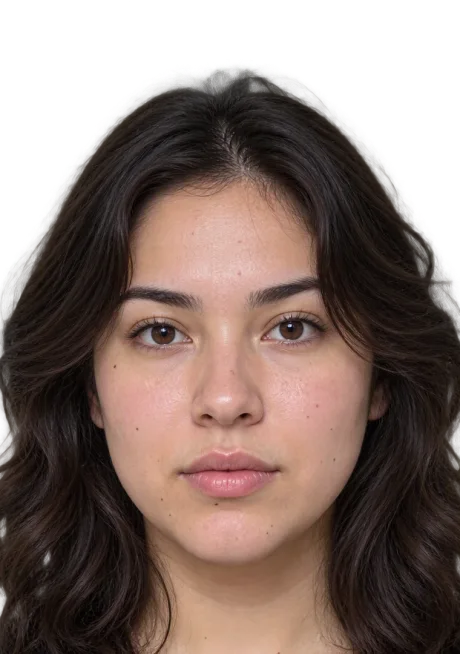
478-point landmark map
Step 1 of 2 · your photo
Add a photo to measure
Phone at arm’s length and at eye level, face straight on, hair off the forehead, a relaxed face, even light.
How it works
Add your photo
Camera or upload, either works.
Mapped in your browser
478 landmarks, entirely on your device.
Your measured result
Numbers and lines drawn on your photo.
On-device · never uploaded
478 landmarks
Free · no signup
The science
What does a face analysis measure?
01
A face analysis reads the geometry of your face from a photo: how its parts are placed, how they compare left to right and top to bottom, and how each proportion sits against the range most faces fall in. Facial analysis started as a tool for surgeons and orthodontists planning treatment; the same measurements now come from a phone photo in seconds.
02
This face analyzer finds 478 points on your face with Google’s MediaPipe face model, in your browser, and runs the 19 measurements of the SkinPal face report on them. Five are yours in full, free: your facial harmony out of 100, your face shape, symmetry, the balance of your facial thirds and your canthal tilt, each with the typical range it is read against. The other 14 are named on your result and measured in the full report.
Free face analysis: what you get, and what is in the full report
The free face analysis gives five readings in full, each with the typical range it is read against and whether yours sits inside it. The same photo measures 14 more; your result names them, and the full report reads every one, says what it means for your face and what to do about it, and builds a 12 week plan from them.
| What | Free face analysis | Full report |
|---|---|---|
| Facial harmony, out of 100 | Score, band and typical range | Plus what moves it |
| Face shape | Named, from measured ratios | Plus the haircuts, frames and beard lines for it |
| Symmetry, facial thirds, canthal tilt | Each on its typical range | Plus what each means and what to do |
| 14 more: PSL estimate, golden ratio, width to height, midface, philtrum, jaw angle, jaw width, eye shape, eye color, lip shape, pupillary distance, skin clarity, pore visibility, under-eyes | Named | Each measured on its range, with what to do |
| Styles, routine and a 12 week plan | No | Yes |
How the AI face analysis works
Your photo is drawn to a canvas in your browser, where Google’s MediaPipe face model places 478 points on it. Every measurement is geometry between those points: distances, ratios and angles, the same math the single tools on this site run: the face shape detector, the face symmetry test, the facial thirds tool and the canthal tilt test each show one of these readings with its parts.
Each reading is placed on the typical range the SkinPal face report uses: symmetry 84% or more, the lower third against the middle third 0.80 to 1.25, canthal tilt +1.5° or more, harmony 60 or more. A reading inside its range is normal anatomy, not an achievement; one outside it is where the full report starts.
Facial analysis readings explained
The five readings of the free facial analysis, what each one measures and where most faces fall.
| Reading | What it measures | Typical range |
|---|---|---|
| Facial harmony | Symmetry 35%, thirds balance 25%, facial fifths 25%, face length to width 15% | 60 or more; most faces 68 to 79 |
| Face shape | Face length, cheekbone, jaw and forehead width | Oval, round, square, heart, oblong or diamond |
| Symmetry | Six mirrored pairs of points against the midline | 84% or more |
| Facial thirds | Nose base to chin divided by brow to nose base | 0.80 to 1.25 |
| Canthal tilt | The angle from the inner to the outer corner of each eye | +1.5° or more |
The harmony bands: under 55 distinctive geometry, 55 to 67 mixed geometry, 68 to 79 balanced harmony, 80 to 87 high harmony, 88 or more exceptional harmony. The attractiveness test puts the same harmony on a 1 to 10 scale.
How to take a photo for face analysis
A face analyzer is only as good as the photo. One minute of setup makes two photos of you agree.
- Step 1Hold the phone at arm’s length and at eye level, face the lens straight on, and keep your head level.
- Step 2Pull your hair off your forehead and away from your jaw, relax your face and close your mouth.
- Step 3Stand facing a window or another soft, even light, with no strong shadow on one side.
- Step 4Upload the photo, or take it with the camera, and wait a few seconds while the 478 points are mapped.
To track a change, take every photo the same way: same distance, same height, same light. The full report and the SkinPal app keep that baseline.
Face analyzer accuracy: what a photo can and cannot read
A photo flattens a face, and the distance it was taken from changes what it shows. We measured this on the reference faces behind the looksmax AI: seen from arm’s length (45 cm) instead of from far away, the same faces read a face width ratio 0.26 lower and a harmony 5 points lower, because a close lens shrinks the sides of the face against its center. That is why this face analysis asks for an arm’s length photo, and why two photos you compare should be taken the same way.
What no front photo reads: how far your brow bone, cheekbones and chin project, your nose from the side, and anything about skin that the light decides. Your side profile needs its own photo; the side profile analysis measures it.
FAQ
Common questions
Is this face analysis free?+
Yes. The face analysis on this page is free with no signup: one photo gives your facial harmony, face shape, symmetry, facial thirds and canthal tilt in full, each against its typical range. The same photo also measures 14 more, from jaw angle to skin clarity; those, what each means and a 12 week plan are in the full report, which is a paid one-time report.
What does an AI face analysis measure?+
Proportions you can check. This one maps 478 points on your face and measures facial harmony (symmetry, thirds, fifths and face length to width, weights disclosed), face shape from four width and length ratios, symmetry across six mirrored pairs of points, the lower third against the middle third, and the angle of your eyes. It does not guess your age, mood or ethnicity, and it gives no beauty verdict.
How accurate is a face analyzer from one photo?+
The same photo always gives the same numbers. Two photos of you can differ, and the photo setup is what moves them: a head tilt lowers symmetry, and the camera distance changes widths. Measured on our reference faces, a photo from arm’s length (45 cm) read the face width ratio 0.26 lower and the harmony 5 points lower than a photo from far away. Take every photo you compare the same way.
What is a good facial harmony score?+
Most faces land between 68 and 79, which this analysis calls balanced harmony. 80 to 87 is high harmony and 88 or more exceptional; 55 to 67 reads mixed geometry and under 55 distinctive geometry. The score covers geometry only: skin, hair, grooming and expression move how a face is seen as much or more, and none of them are in it.
Can a face analysis tell my face shape?+
Yes. Your face shape is named from measured ratios, not guessed: face length against cheekbone width, and jaw and forehead width against the cheekbones, give oval, round, square, heart, oblong or diamond. The face shape detector on this site shows those ratios with the haircuts and frames for each shape.
Why did my symmetry change between two photos?+
Because the photos differ, not your face. A head turned or tilted a few degrees, a lens held close, a shadow on one side or a half smile all move the points the symmetry is measured from. Face the camera straight on with the phone at eye level and compare photos taken the same way.
Is my photo uploaded?+
No. The face model runs in your browser and your photo stays on your device. Nothing about your face is sent to a server.
Keep going
Face shape detector →
Oval, round, square, heart, oblong, or diamond — measured, not guessed.
Face symmetry test →
How symmetric your face is, point by point.
Facial thirds & ratios →
Upper, middle, and lower thirds — where yours differ.
Canthal tilt test →
The angle of your eyes, measured in degrees.
Looksmax AI →
Your halo and failo: nine measured features ranked against reference faces of your sex, with the honest lever for each weak one.