
Free · runs on your device
AI skin analysis
One selfie, analyzed entirely in your browser: redness, evenness, shine, and skin depth scored zone by zone with the same Lab color math used in dermatology colorimetry. Your photo never leaves your device.
CostFree
TimeUnder 1 min
SignupNone
DataStays on device
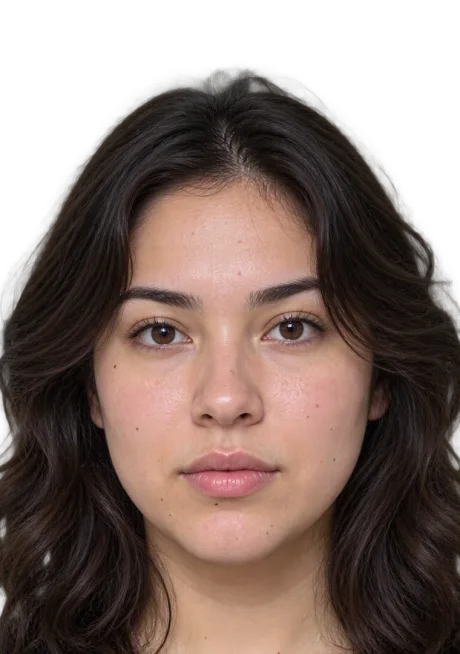
478-point landmark map
Step 1 of 2 · your photo
Add a photo to measure
Face the camera straight on, hair off the face, even light, no tilt.
How it works
Add your photo
Camera or upload — either works.
Mapped in your browser
478 landmarks, entirely on your device.
Your measured result
Numbers and lines drawn on your photo.
On-device · never uploaded
478 landmarks
Free · no signup
The science
How on-device skin analysis works
01
This tool runs a face-landmark model (MediaPipe FaceLandmarker) in your browser to locate 478 points on your face, then samples the skin pixels in five zones — forehead, both cheeks, nose, and chin. Each zone is converted from screen RGB into Lab color space, the same perceptual space used in dermatology colorimetry, where redness (a*), yellowness (b*), and lightness (L*) can be measured separately instead of eyeballed.
02
From those zone statistics it scores four things: redness (how far the a* channel sits above your own baseline), evenness (how much tone varies across and within zones), shine (bright specular highlights relative to surrounding skin), and depth via the ITA angle — the individual typology angle used in skin-tone research. Because everything is relative to your own skin, the scores describe your face, not a comparison against someone else’s.
03
Two honest limits. First, lighting dominates single-photo analysis — indirect daylight and no filter give meaningful numbers, warm evening light does not. Second, one photo is a snapshot; the interesting signal is the trend. The SkinPal app scores eight metrics per scan and tracks them across weeks, which is where the “is my skin actually improving?” answer lives.
What each of the four scores is telling you
Redness (the a* channel) elevated across all zones suggests overall reactivity or flushing; concentrated in the nose-cheek center it patterns like rosacea-adjacent redness; a single hot zone is usually irritation or breakout. Evenness compares your flat zones against each other — low scores with visible spots mean pigment variation (sun, post-acne marks); low scores without spots usually mean lighting gradients, so reshoot before concluding. T-zone shine reads the forehead-nose highlight against the cheeks: consistently high suggests oily-type skin (cross-check with the skin type test); high only in afternoon photos is normal sebum accumulation. Depth (ITA) is descriptive, not a score — it anchors the other readings to your baseline tone.
One reading is a snapshot of skin *and* lighting; the pattern across weeks under the same conditions is the signal. That longitudinal read — is redness trending down since you cut the acid? is evenness improving on vitamin C? — is exactly what the SkinPal app automates with controlled capture and eight tracked metrics.
FAQ
Common questions
Is my photo uploaded anywhere?+
No. The landmark model and all pixel math run inside your browser. The photo is drawn to a local canvas, analyzed, and discarded — nothing is transmitted, which you can verify in your browser’s network tab.
How accurate is AI skin analysis from a selfie?+
Good enough to be directionally useful, not clinical. Lab-space color measurement is a real dermatology method, but a phone photo adds lighting and camera processing that a clinical device controls for. Use consistent lighting and treat changes over time as the signal.
What is the best lighting for a skin analysis photo?+
Soft, indirect daylight facing a window, no filter, no beauty mode. Overhead bathroom light creates shadows that read as dark circles and unevenness; warm bulbs shift every color measurement.
Why do my scores change between photos?+
Lighting, mostly: warm bulbs shift redness, side light wrecks evenness, and flash creates shine that isn’t there. Compare scores only between photos taken in the same spot, same light, same time of day — then changes reflect skin.
Can this detect skin conditions?+
No — it measures color statistics, not diagnoses. Persistent redness with bumps, painful acne, or new pigment changes are dermatologist territory; this tool’s job is tracking the cosmetic metrics between those visits.
What is a good evenness score?+
Above ~70 in even lighting reads as visibly uniform skin. Scores in the 40–60 band usually mean either real tone variation worth treating (SPF + brightening actives) or uneven light — the reshoot rule settles which.
Keep going
Skin type test →
Eight questions to place you as dry, oily, combination, normal, or sensitive-leaning.
Acne severity test →
Six questions that place your breakouts on a mild-to-severe scale and explain the bands.
Dehydrated skin test →
Tell dehydration apart from dry skin — one is a lack of water, the other a lack of oil.