
Free calculator · no signup
Waist to Hip Ratio Calculator: Your WHR on the WHO Cut-off
Enter your waist and hips to get your waist to hip ratio and see it against the World Health Organization’s cut-off, 0.90 for men and 0.85 for women, plus what your waist alone reads on the WHO’s marks and the waist that would put you under the line at your hips.
CostFree
TimeUnder 1 min
SignupNone
DataKept on device
Sex
Units
Waist
cmHips
cmWaist midway between your lowest rib and the top of your hip bone, which is just above the belly button, breathing out normally; hips around the widest part of the buttocks. Tape level and snug, not pressing.
WHO protocol, 2008 expert consultation
Your ratio shows here as soon as your waist and hips are in.
Start your glow up
SkinPal on iPhone and Android
Next step · SkinPal app
Your waist is the number that moves.
A smaller waist lowers the ratio. SkinPal builds your glow up plan for it: exercise, daily habits, styling and skin care, reminds you every day, and shows your before and after week by week.

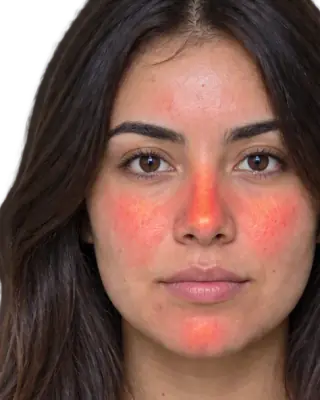
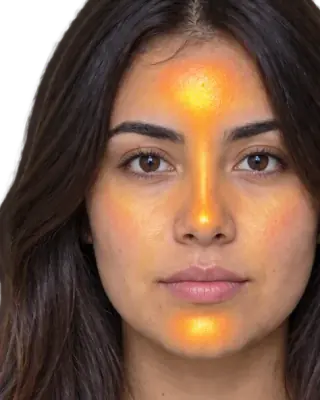

What you unlock in the app
- Full face analysisProportions, symmetry and skin, measured from one selfie
- Full skin report cardSee what's good and what needs work, from acne to skin age
- Heatmaps of your faceSee exactly where redness, oil and breakouts are
- Flare, your AI skin coachAsk anything, get answers based on your own face
- Morning and night routineMade for you, and it changes as you improve
- Ingredient scannerKnow if a product suits you before you buy it
- Progress trackingSee your before and after, week by week
The science
What is a healthy waist to hip ratio?
01
Your waist to hip ratio is your waist divided by your hips, in the same unit. The World Health Organization’s 2008 expert consultation on waist circumference and waist to hip ratio puts a substantially increased risk of metabolic complications at a ratio of 0.90 or more in men and 0.85 or more in women. Under those lines is the healthy side of the WHO cut-off.
02
The ratio says where fat sits: around the waist or around the hips. The same WHO report sets marks for the waist alone, over 94 cm in men and 80 cm in women for increased risk and over 102 and 88 cm for substantially increased risk, and this calculator reads your waist on those too.
03
Measure the WHO way: the waist midway between your lowest rib and the top of your hip bone, which is just above the belly button, and the hips around the widest part of the buttocks, standing, tape level, after breathing out. A risk marker, not a diagnosis.
Waist to hip ratio chart for men and women
The WHO cut-offs, with the waist marks from the same report. The calculator reads your ratio on the first two columns and your waist on the last two.
| Sex | Ratio under the cut-off | Substantially increased risk | Waist: increased risk | Waist: substantially increased |
|---|---|---|---|---|
| Men | Ratio under 0.90 | Ratio 0.90 or more: substantially increased risk | Waist over 94 cm (37.0 in): increased risk | Waist over 102 cm (40.2 in): substantially increased |
| Women | Ratio under 0.85 | Ratio 0.85 or more: substantially increased risk | Waist over 80 cm (31.5 in): increased risk | Waist over 88 cm (34.6 in): substantially increased |
The waist marks were set on European populations, and the WHO report discusses how the risk at a given waist differs between ethnic groups, so read the waist columns as a European yardstick.
How to measure your waist to hip ratio
The WHO protocol, from the same report as the cut-offs.
- Step 1Stand with your feet together, arms relaxed at your sides, weight even on both feet.
- Step 2Waist: find the bottom of your lowest rib and the top of your hip bone (the iliac crest) on one side, and wrap the tape level around your body midway between them. Breathe out normally and read it.
- Step 3Hips: wrap the tape around the widest part of your buttocks, level with the floor.
- Step 4Measure each twice and average them; if the two differ by more than 1 cm, measure again. Divide the waist by the hips.
A waist measured at the narrowest point, as body shape charts use, reads a little smaller than the WHO waist, so a ratio from it reads a little lower than the cut-offs were set on.
Waist to hip ratio and heart attack risk
The strongest evidence that the ratio matters is INTERHEART: 12,461 people who had a first heart attack and 14,637 who had not, in 52 countries (Yusuf et al., Lancet, 2005). The odds rose with every fifth of waist to hip ratio, to 2.52 times in the top fifth against the bottom, and the top two fifths of the ratio accounted for 24.3% of the heart attacks. The top two fifths of BMI, in the same people, accounted for 7.7%, and BMI’s top fifth went from 1.44 times the odds to 1.12 once the ratio was taken into account.
That is why the ratio is worth knowing even at a healthy weight: it reads where fat sits, which weight and BMI cannot.
Waist to hip ratio and attractiveness
The ratio is also the most studied number in body attractiveness research. In Singh’s 1993 studies (Journal of Personality and Social Psychology), college men and men aged 25 to 85 rated drawings of women with lower ratios as more attractive and healthier; the drawings ran from 0.7 to 1.0, and 0.7 scored highest. Those were drawings rated by men, a preference, not a health target. For the outline itself, the body shape calculator sorts bust, waist and hips into your shape.
Waist to hip ratio vs waist to height ratio
Both read fat at the middle. The waist to hip ratio needs the sex, because men and women have different cut-offs, and it can read well when the hips are large; the waist to height ratio uses one boundary for everyone, 0.5, because height does not change. The waist to height ratio calculator reads the same waist against your height, on the 2025 NICE bands.
How to lower your waist to hip ratio
The ratio moves when the waist does: a smaller waist at the same hips lowers it, and at your hips the result names the waist that would put you under the cut-off. A tape once a month, the same way each time, shows the change. The body fat calculator turns a waist and neck measurement into body fat, so you can see both move.
FAQ
Common questions
What is a good waist to hip ratio for a woman?+
Under 0.85. The WHO puts a substantially increased risk of metabolic complications at 0.85 or more in women. A waist of 76 cm with 100 cm hips is 0.76.
What is a good waist to hip ratio for a man?+
Under 0.90. The WHO puts a substantially increased risk of metabolic complications at 0.90 or more in men, so a man with 100 cm hips reaches it at a 90 cm waist.
What is an ideal waist to hip ratio for attractiveness?+
In Singh’s 1993 studies, men rated drawings of women with lower waist to hip ratios as more attractive and healthier; the drawings ran from 0.7 to 1.0, and 0.7 scored highest. That is a preference in drawings, not a health target: for health, the line is the WHO’s 0.85.
Is a 70 cm waist small?+
On its own it is under the WHO’s 80 cm mark for women and 94 cm for men. As a ratio it depends on the hips: with 95 cm hips it is 0.73, under both cut-offs. Against height, 70 cm is under half of anyone taller than 140 cm.
How do I measure my waist and hips for the ratio?+
Waist: find the bottom of your ribs and the top of your hip bone, and wrap the tape midway between them, which is just above the belly button. Breathe out normally. Hips: around the widest part of your buttocks. Stand with feet together, keep the tape level and snug without pressing, and measure each twice.
Is the waist to hip ratio better than BMI?+
For heart attacks, it was the stronger marker in INTERHEART, a study of 27,098 people in 52 countries (Yusuf et al., Lancet, 2005): risk rose with every fifth of waist to hip ratio, and the top two fifths accounted for 24.3% of heart attacks, against 7.7% for the top two fifths of BMI.
Is a ratio of 1.0 bad?+
A ratio of 1.0 means your waist is as big as your hips, which is over the WHO cut-off for both sexes, 0.90 for men and 0.85 for women. It marks a substantially increased risk of metabolic complications, not a diagnosis; a doctor can check what it means for you.
Keep going
Waist to height ratio calculator →
Is your waist under half your height? Your ratio on the NICE bands, the same boundary for men and women.
Body shape calculator →
What body shape am I? Bust, waist and hips sorted into hourglass, pear, apple, rectangle or inverted triangle, with styling notes.
Body fat calculator →
Your body fat percentage from a tape measure (US Navy method), with its error, the healthy range for your age and a drawn body fat chart.