
Free · runs on your device
Attractiveness test
A facial harmony score from your measured geometry — symmetry, thirds, fifths, and the golden ratio, weights disclosed — plus a full 13-section face report you can download as a PDF. All free, all on your device.
CostFree
TimeUnder 1 min
SignupNone
DataStays on device
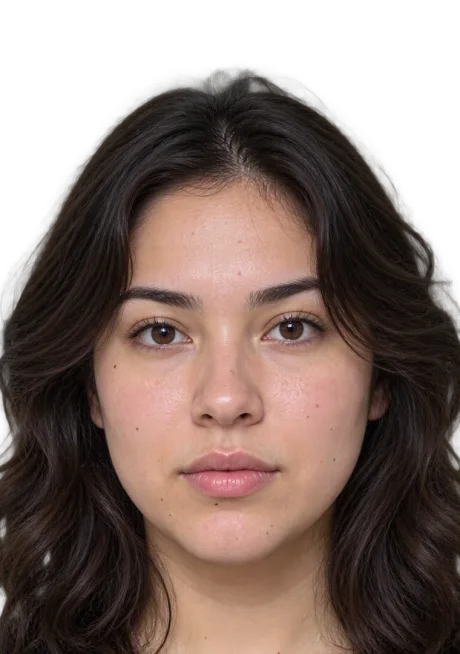
478-point landmark map
Step 1 of 2 · your photo
Add a photo for your full report
One photo → your harmony score plus 12 more measured sections. Face the camera straight on, even light.
How it works
Add your photo
Camera or upload — either works.
Mapped in your browser
478 landmarks, entirely on your device.
Your measured result
Numbers and lines drawn on your photo.
On-device · never uploaded
13-section report + PDF
Free · no signup
 SkinPal AI — Face Report
The science
What a geometry score can measure — and what it honestly can’t
01
This test measures four things from your 478 facial landmarks: symmetry (mirrored-pair deviations, weighted 35%), facial thirds balance (25%), facial fifths — the classical five-eye-width horizontal canon (25%) — and your length-to-width ratio against the golden ratio, adjusted for the landmark window (15%). The weights are disclosed calibration, not universal law. Every input is measured on your device — nothing is rated by an AI’s opinion, your photo never leaves your browser, and the same photo also generates a full 13-section report you can download as a PDF.
02
Now the honest part, because this category is full of nonsense: attractiveness research consistently finds that geometry is only one input, and not the biggest. Skin quality and evenness, expression, grooming, and averageness (how typical your features are for your population) all move real-world attractiveness ratings substantially — and none of them are in this score. Perfectly symmetric, perfectly proportioned faces generated in labs consistently rate as uncanny rather than beautiful. Most real faces score 60–85 here, and "distinctive geometry" describes memorable faces, not flawed ones. Use the number as geometry trivia, not identity.
Understanding your score band
Exceptional harmony (88–100) means every measured component sits close to its classical target at once — rarer for the combination than for any single component. High harmony (80–87) is strong alignment with modest variation in one component, usually fifths or the golden ratio. Balanced harmony (68–79) is where most well-lit, straight-on photos of real faces land: solidly aligned geometry with one or two identifiable outliers, which the component bars point to directly.
Mixed geometry (55–67) usually means one component is dragging an otherwise typical face — most often symmetry pulled down by head tilt or uneven lighting rather than by the face itself. Distinctive geometry (below 55) describes faces that sit far from classical targets, and here the honest framing matters most: fashion has always run on distinctive geometry, and the most-photographed faces of any era include plenty that would score here. Reshoot in even light before believing a low symmetry number.
How to improve the parts that can actually move
Bone geometry is fixed, so treat the fixed components as information, not homework. What genuinely moves in photos and in person: symmetry readings improve with straight-on posture and even lighting (the measurement artifact is real — so is the visual effect); brows are the strongest adjustable line on the face and can visibly rebalance thirds and eye spacing; hair adds or removes width exactly where you choose; and skin quality — which this score deliberately excludes — moves real-world attractiveness ratings more than any ratio, and responds to a consistent routine within weeks.
That is the practical use of the full report below the score: it separates what to accept (your ratios), what to style around (shape recommendations chain from these exact measurements), and what to work on (the skin sections respond to routine changes you can track).
SkinPal vs other attractiveness tests
Most face-rating sites run your photo through an opaque model and hand back a number with no explanation — you cannot tell what moved it or verify anything. This test does the opposite: the four components and their weights are printed on your result, every input is a measurement you can check against the drawn landmarks, and the photo never leaves your browser. And where competitors sell the detailed breakdown as a paid report, the full 13-section report here is free, downloadable as a PDF, and generated from the same photo in the same second.
FAQ
Common questions
Is this a real attractiveness rating?+
It is a real measurement of geometric harmony — symmetry, proportions, ratios — which is one component of attractiveness. It deliberately does not judge skin, expression, or style, which research says matter as much or more. No single number rates a face.
What is a good score?+
Most straight-on, well-lit photos of real faces land between 60 and 85. Below that usually means head tilt or uneven lighting before it means anything about your face — reshoot before you conclude.
Is this the same as a PSL rating?+
No, and deliberately not. PSL ratings are subjective attractiveness scales from looksmaxxing forums. This is measured geometry with named components you can verify — and an explicit statement of what it leaves out.
How attractive am I, actually?+
No test can answer that — including this one, and including every "AI face rater" online. What a photo test can measure is geometric harmony; what it cannot see is expression, skin in motion, style, and the averageness effect. Use the score as a baseline for the components you can actually work on, which is what the full report breaks down.
What do the score bands mean?+
Exceptional harmony (88+), high harmony (80–87), balanced harmony (68–79), mixed geometry (55–67), and distinctive geometry (below 55). Most well-lit, straight-on photos of real faces land 60–85. The bands describe alignment with classical geometric targets — famously attractive faces sit in every band.
Why is my score different between photos?+
Because the geometry the camera captures changes: head tilt shifts symmetry, a low camera angle stretches the lower third, and lens distance changes apparent ratios. Scores from arm’s-length, straight-on, even-light photos are stable within a couple of points; selfie-distance shots are not comparable to them.
Does the test rate makeup or filters?+
Landmark positions barely move with makeup, so contouring does not meaningfully change the geometry score — but filters that reshape the face (jaw slimming, eye enlarging) absolutely do, and defeat the point of measuring. Bare photo, no filter, honest number.
Is a 90+ score realistic?+
It happens, but rarely, because it requires every component to align at once. Most faces have at least one ratio comfortably away from the classical target — and that is the population norm, not a shortfall.