
Free · runs on your device
Pore visibility check
Which zones of your face read as most textured, measured from your photo in your browser — with the honest biology: pores don’t shrink, but visibility genuinely changes.
CostFree
TimeUnder 1 min
SignupNone
DataStays on device
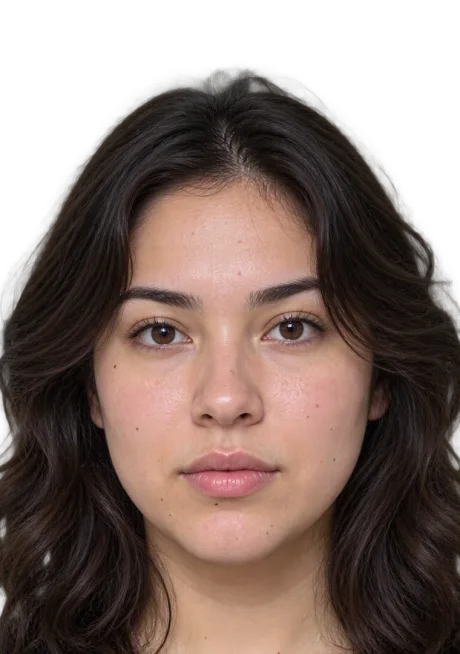
478-point landmark map
Step 1 of 2 · your photo
Add a photo to measure
Face the camera straight on, hair off the face, even light, no tilt.
How it works
Add your photo
Camera or upload — either works.
Mapped in your browser
478 landmarks, entirely on your device.
Your measured result
Numbers and lines drawn on your photo.
On-device · never uploaded
478 landmarks
Free · no signup
The science
What pore visibility actually is — and what changes it
01
This tool locates five zones with facial landmarks, then measures local luminance texture — how much fine light-dark variation the skin surface shows — normalized for brightness so shadows don’t count. That texture signal is a proxy for how visible pores and surface irregularity read in that lighting; it is not a pore count, and sharp focus plus even light matter a lot.
02
The honest biology: pore size is set by genetics and oil-gland activity, and no product shrinks a pore permanently. What changes is visibility — clearing the oxidized oil that makes pores read darker (BHA), keeping the lining thin (retinoids), and reducing the oil that stretches them through the day. That is why the same pores look different week to week.
The pore-minimizing routine that actually has evidence
Daily: a BHA (salicylic acid 2%) two to four times weekly dissolves the oxidized oil that makes pores read dark, and a niacinamide serum modestly regulates sebum. Nightly over months: a retinoid — the only topical with decent evidence for tightening the pore’s structural read, by thickening surrounding collagen. Situational: clay masks before events (temporary degrease), primers that optically blur (cosmetic, instant, honest). The skip list: pore strips beyond occasional satisfaction (three days of difference), harsh scrubs (irritation enlarges the read), and anything promising to "close" pores — pores are not doors.
FAQ
Common questions
Can you actually shrink pores?+
No — pore size is structural. You can meaningfully reduce visibility: salicylic acid clears the dark plugs, retinoids thicken surrounding collagen over months, and oil control reduces midday stretch. "Pore-shrinking" marketing is describing these temporary effects.
Why do my pores look bigger in some photos?+
Lighting. Harsh side light rakes across the skin and shadows every irregularity; soft frontal light fills them in. That is also why this tool asks for even light — and why mirror-under-bathroom-lighting despair is usually a lighting artifact.
Is my photo uploaded?+
No — landmarks and texture math run entirely in your browser. The photo never leaves your device.
Why are my nose pores so visible?+
The nose has the face’s densest, most active sebaceous glands — everyone’s nose pores are their most visible. Sebaceous filaments (the uniform gray dots) live there too; the blackheads-vs-filaments distinction decides the right expectations.
Does cold water close pores?+
No — pores have no muscles. Cold briefly tightens surrounding skin, which shrinks the read for minutes. The durable levers are oil control and collagen (retinoids), not temperature.
Keep going
Skin type test →
Eight questions to place you as dry, oily, combination, normal, or sensitive-leaning.
Acne severity test →
Six questions that place your breakouts on a mild-to-severe scale and explain the bands.
Dehydrated skin test →
Tell dehydration apart from dry skin — one is a lack of water, the other a lack of oil.