
Free · runs on your device
fWHR calculator
Facial width-to-height ratio: cheekbone width divided by the distance from your upper eyelids to your upper lip, measured from one photo.
CostFree
TimeUnder 1 min
SignupNone
DataStays on device
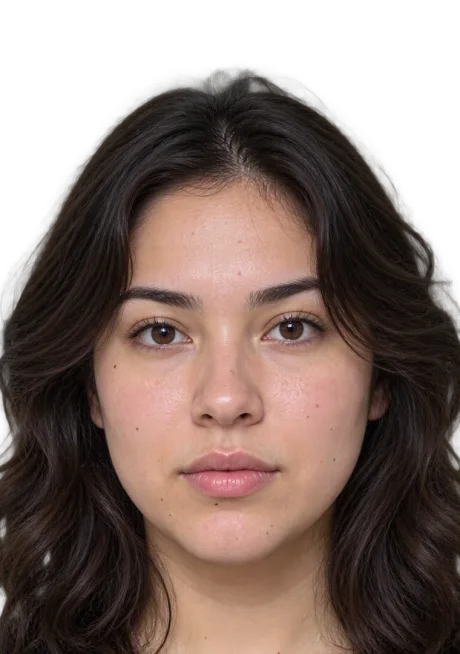
478-point landmark map
Step 1 of 2 · your photo
Add a photo to measure
Face the camera straight on, hair off the face, even light, no tilt.
How it works
Add your photo
Camera or upload — either works.
Mapped in your browser
478 landmarks, entirely on your device.
Your measured result
Numbers and lines drawn on your photo.
On-device · never uploaded
478 landmarks
Free · no signup
The science
What your fWHR number means, and what it does not
01
Facial width-to-height ratio divides cheekbone width by the distance from your upper eyelids to your upper lip. Reported adult values cluster between roughly 1.7 and 2.1. Under 1.7 the face reads long and narrow; over 2.1 it reads wide and short. Neither end is a flaw, but each end does shape which hairstyles, glasses and beard shapes work, and the tools on this site use that.
02
fWHR has a large research literature claiming links to dominance and aggression. Read it with skepticism: replication has been mixed, effect sizes are small, and later analyses found the relationships weaker than the early papers. The measurement is real; the personality story attached to it is not something to take as fact about yourself or anyone else.
03
Weight moves this number because facial fat sits over the cheekbones. A wide-angle phone camera held close moves it more, by exaggerating width. If your reading sits outside the range, take it again at arm length, head level, before drawing any conclusion. The ratio is a stable feature of your face; the photo is the variable.
FAQ
Common questions
What is a normal fWHR?+
Roughly 1.7 to 2.1 for most adults. Under 1.7 is a long, narrow face; over 2.1 is a wide, short one. Landmark conventions differ between studies, so compare your number only against the same method.
Does fWHR predict personality?+
The evidence is contested and the effects, where found, are small. Treat it as a proportion of your face, not a statement about your character.
Does fWHR change with weight?+
Yes. Facial fat widens the measured face while the bone stays the same, so a change of ten kilograms can move the ratio noticeably.
What should I do with the number?+
Use it for what it is good for: choosing shapes. A wider face carries longer hair and angular frames; a longer face carries width on top and rounder frames. The face-shape tools on this site take it from here.