Free · runs on your device
Vocal Range Test: What Is My Vocal Range?
Sing your lowest note, then your highest, and this vocal range test names both notes, measures the range between them in octaves and semitones, and shows which of the six voice types, bass to soprano, your range is consistent with. It takes under a minute, and your voice is measured in your browser as you sing, never recorded or uploaded.
CostFree
TimeUnder 1 min
SignupNone
DataKept on device
Voice types to match
- 1 · Sing “ah” on your lowest comfortable note and hold it for a second.
- 2 · Then sing your highest note without straining, and hold that too. Steps in between are fine.
- 3 · Tap Done.
Your browser asks for the microphone. Your voice is measured in this page as you sing and is never recorded, saved or uploaded. Free, no signup.
Start your glow up
SkinPal on iPhone and Android
Next step · SkinPal app
You know your range. Look the part when you sing it.
SkinPal does not train voices. It reads your face and skin from a selfie and builds your glow up plan: styling, skin care, exercise and daily habits. It reminds you every day and shows your before and after, week by week.
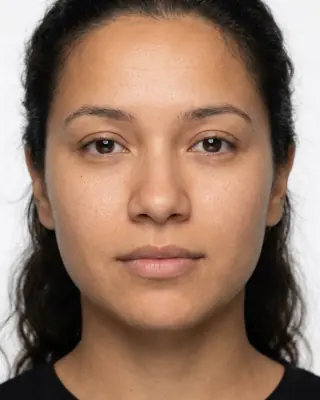
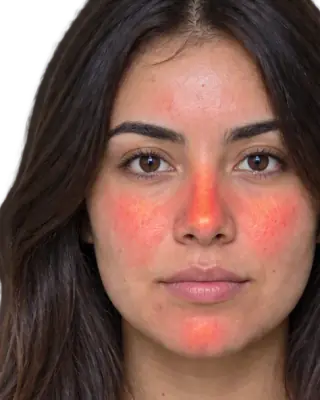
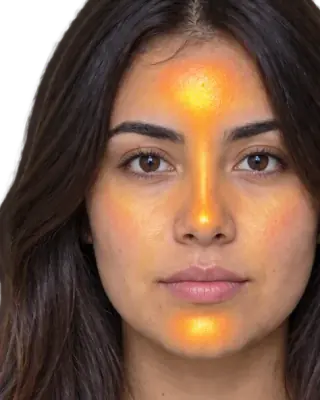

What you unlock in the app
- Full face analysisProportions, symmetry and skin, measured from one selfie
- Full skin report cardSee what's good and what needs work, from acne to skin age
- Heatmaps of your faceSee exactly where redness, oil and breakouts are
- Flare, your AI skin coachAsk anything, get answers based on your own face
- Morning and night routineMade for you, and it changes as you improve
- Ingredient scannerKnow if a product suits you before you buy it
- Progress trackingSee your before and after, week by week
The science
How does the vocal range test work?
01
Sing “ah” on your lowest note and hold it, then on your highest note and hold that. The test listens through your microphone and measures your pitch 50 times a second with YIN, the method published by de Cheveigné and Kawahara in 2002. A note counts once you hold it for 0.5 seconds within 0.8 of a semitone, which leaves room for vibrato and a little drift but not for a swoop, a crack or a note you only touch on the way. Its name is the nearest note of the standard tuning, A4 = 440 Hz, in the octave numbering where middle C is C4. It reads from A1 to F#6.
02
Your voice never leaves your device. The microphone feeds the page’s own audio processing in your browser, which measures each fiftieth of a second of sound and overwrites it with the next. Nothing is recorded, saved or uploaded, there is no audio file, and the microphone turns off when you tap Done.
03
Your range is the distance from your lowest held note to your highest. The test then compares it with the typical ranges of the six main voice types in vocal pedagogy, bass, baritone and tenor for men and contralto, mezzo-soprano and soprano for women, and names the type whose range ends sit closest to yours, or two when they are within 2 semitones of each other. It needs at least 7 semitones between your two notes to name one.
Voice type test: bass, baritone, tenor, contralto, mezzo-soprano, soprano
These are the typical ranges vocal pedagogy gives the six main classical voice types (McKinney, The Diagnosis and Correction of Vocal Faults, 1994; the bass from Boldrey, Guide to Operatic Roles and Arias, 1994). The test names the type, or two, whose range ends sit closest to the lowest and highest notes you hold.
| Voice type | Typical range | In hertz | Source |
|---|---|---|---|
| Bass | E2 to E4 | 82 to 330 Hz | Boldrey 1994 |
| Baritone | A2 to A4 | 110 to 440 Hz | McKinney 1994 |
| Tenor | C3 to C5 | 131 to 523 Hz | McKinney 1994 |
| Contralto | F3 to F5 | 175 to 698 Hz | McKinney 1994 |
| Mezzo-soprano | A3 to A5 | 220 to 880 Hz | McKinney 1994 |
| Soprano | C4 to C6 | 262 to 1047 Hz | McKinney 1994 |
The ranges overlap: a baritone’s A2 to A4 shares most of its notes with the bass and the tenor, which is why a range alone often fits two types, and the result then names both.
Vocal range chart: notes and their frequencies
Each step up one note raises the frequency by about 6%, and each octave doubles it. The notes that start and end each voice type, in hertz:
| Note | Frequency | Where it sits |
|---|---|---|
| C2 | 65.4 Hz | Low extreme for some basses |
| E2 | 82.4 Hz | Bass low |
| A2 | 110.0 Hz | Baritone low |
| C3 | 130.8 Hz | Tenor low |
| F3 | 174.6 Hz | Contralto low |
| A3 | 220.0 Hz | Mezzo-soprano low |
| C4 | 261.6 Hz | Soprano low |
| E4 | 329.6 Hz | Bass high |
| A4 | 440.0 Hz | Baritone high |
| C5 | 523.3 Hz | Tenor high |
| F5 | 698.5 Hz | Contralto high |
| A5 | 880.0 Hz | Mezzo-soprano high |
| C6 | 1046.5 Hz | Soprano high |
How to find your vocal range at home
A few steps make the reading match your real voice:
- Step 1Warm up first: hum or slide through a few comfortable notes for a minute, so the test hears the voice you sing with.
- Step 2Sing on “ah”, at a comfortable volume, and hold each note for a second. Only notes held 0.5 seconds count.
- Step 3Go down until the tone turns into a creak, and stop at the last clear note. A creak (vocal fry) is not a held note.
- Step 4Go up until you would have to strain, and stop at the last free note. Pushing past it strains the voice.
- Step 5Test on another day too: voices vary from day to day, and the better of two takes is closer to your range.
Time of day mattered less than people expect in one study: 20 untrained women produced voice range profiles in the morning and the evening, and the two showed no clear difference (van Mersbergen, Verdolini and Titze 1999).
What is my vocal range, and what is a good one?
Your vocal range is the span from your lowest to your highest held note, and the test gives it in octaves and semitones: 2 octaves is two full octaves, the width of every typical voice type range in the table. There is no score for a range, and no published average for untrained singers we would stand behind, so the test does not grade yours. Two octaves is a fair benchmark for a trained voice, and the notes that matter for singing are the ones in the middle of your range that you can hold comfortably for a whole song.
Vocal range or voice type: why the result says consistent with
Choirs sort voices by range alone, but voice teachers classify a solo voice by more than its two ends: where it sits most comfortably (the tessitura), its weight and color, and where it changes register. Two singers with the same range can be a baritone and a tenor. So the test names the types your range is consistent with, never the type you are, and a teacher who hears you sing is the way to a classification.
How accurate is this vocal range test?
We tested the note naming on synthetic sung vowels, every semitone from C2 to C6: 49 of 49 were named right as clean tones, 49 of 49 with vibrato of half a semitone either way, 49 of 49 with room noise and 49 of 49 through a phone-style microphone that cuts everything under 200 Hz. On 72 synthetic range takes, sung with breaths, swoops between notes and a cracked note on the way, the test found the lowest and highest notes in 72 of 72.
Those were synthetic voices, built to have a known answer, not people. A real singer’s voice is less tidy, and the biggest difference between two of your own takes will be your voice on the day, not the test.
Vocal range test or voice pitch test?
This test reads your singing range. How deep your speaking voice is, the pitch you talk at in hertz, is a different measurement: the voice pitch test measures it from three lines read aloud and places it among adult men and women.
FAQ
Common questions
How do I find my vocal range?+
Warm up for a minute, then sing “ah” on a comfortable middle note and walk it down, one note at a time, to the lowest note that still has a clear tone (not a creak), and hold it. Then walk up to the highest note you can sing without straining, and hold that. The test names both notes as soon as you have held each for 0.5 seconds, and measures the range between them.
What are the vocal ranges for each voice type?+
Typical ranges in vocal pedagogy: bass E2 to E4, baritone A2 to A4, tenor C3 to C5, contralto F3 to F5, mezzo-soprano A3 to A5, soprano C4 to C6. Each spans two octaves, and the same sources give each type a few notes more at either extreme: some basses reach C2 and some tenors F5.
What is a good vocal range?+
There is no score for it, and no published average for untrained singers we would stand behind. Each of the six typical voice type ranges spans two octaves, which makes two octaves a fair benchmark for a trained voice. What matters more for singing is the part of your range you can use comfortably for a whole song.
What voice type am I?+
The test names the voice type whose typical range is closest to the lowest and highest notes you hold, among men’s types, women’s types or all six. That is a match on range only. A teacher also listens for where your voice sits comfortably (its tessitura), its color and where it changes register, so read the result as consistent with a type, not as a classification.
What is the lowest note a man can sing?+
The typical bass range starts at E2, about 82 Hz, and some basses reach C2, about 65 Hz. Lower notes are possible in vocal fry, the creaky register, which this test does not count as a held note. It reads down to A1, 55 Hz.
Does falsetto count in a vocal range test?+
It counts as range: any note you hold counts, falsetto included. The typical voice type ranges describe the voice mostly in its normal register, though, so a man who holds high falsetto notes can match a higher type than his speaking voice suggests. Test once in your normal voice to see your type, and once with falsetto to see your full range.
Does this vocal range test record me?+
No. Your pitch is measured in your browser as you sing, and each slice of sound is overwritten by the next. Nothing is recorded, saved or uploaded, and the microphone turns off when you tap Done.
Keep going
Voice pitch test →
How deep is your voice? Your speaking pitch in Hz from a short reading, placed among 379 adults who read aloud. Nothing is recorded.
Face symmetry test →
How symmetric your face is, point by point.
Body fat calculator →
Your body fat percentage from a tape measure (US Navy method), with its error, the healthy range for your age and a drawn body fat chart.