
Free guide · no signup
Where to apply blush
Where blush goes on your face shape — lifted, balanced, never dated. Same product, opposite placements for different faces, both correct.
CostFree
TimeUnder 1 min
SignupNone
DataKept on device
Your face shape
Not sure? Measure it from a photo first →
Start your glow up
SkinPal on iPhone and Android
Next step · SkinPal app
Look good in every photo, not just this one.
The right haircut and glasses are a start. SkinPal builds your full glow up plan: styling, exercise, daily habits and skin care, and keeps you on it every day.
What you unlock in the app
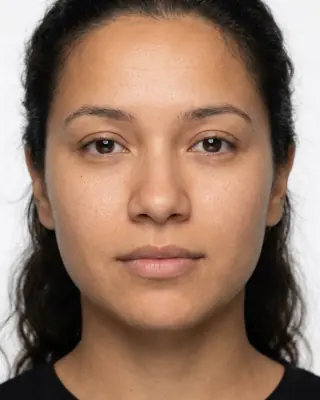
- Full face analysisProportions, symmetry and skin, measured from one selfie
- Full skin report cardSee what's good and what needs work, from acne to skin age
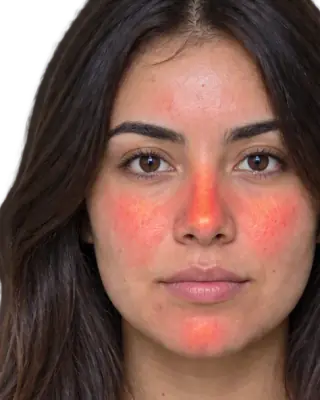
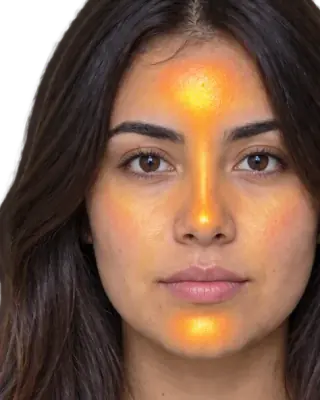
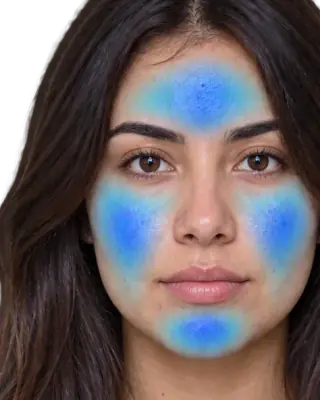
- Heatmaps of your faceSee exactly where redness, oil and breakouts are
- Flare, your AI skin coachAsk anything, get answers based on your own face
- Morning and night routineMade for you, and it changes as you improve
- Ingredient scannerKnow if a product suits you before you buy it
- Progress trackingSee your before and after, week by week
The science
Blush placement is contouring with color
01
Where color sits changes the face’s apparent geometry: high placement along the cheekbone lifts and lengthens, apple placement widens and softens, low placement grounds a top-heavy face. The viral "lifted blush" trend is really just the round-face placement applied universally — flattering on some geometry, unbalancing on others.
02
The mechanism to keep in mind: blush draws the eye to wherever it sits, and adds visual width there. So round faces keep it high and angled (length), long faces keep it horizontal (width), hearts bring it low (rebalancing the wide forehead), and diamonds keep it off the cheekbone peaks that already dominate. Same product, opposite placements, both correct.
Formula and color, placed correctly
Placement from your face shape; then formula by skin type (creams melt into dry and mature skin, powders hold on oily) and color by undertone — the same warm/cool/olive logic as your lip palette: peaches and corals on warm, rosy pinks on cool, muted mauves on olive, with depth scaling to skin depth (deep skin carries saturated brick and berry blushes that vanish... fair skin the reverse). The one universal technique note: apply after foundation, before powder for creams; the reverse for powders — and blend the edge until you cannot find it. A perfectly placed blush with a visible edge reads as a mistake at any placement.
FAQ
Common questions
Where should blush go on a round face?+
Higher on the cheekbone, swept diagonally toward the temples — never horizontally across the apples, which widens the widest zone. A slightly deeper shade doubles as soft contour.
Is the "sun-kissed" nose blush placement for everyone?+
It suits shorter and heart faces best (adds width at the center). On long faces it works if kept horizontal; skip it if your face reads narrow, as it concentrates attention centrally.
Cream or powder blush?+
Placement matters far more than formula. Cream blends more forgivingly for precise placements like the diamond-face apple-only zone; powder holds longer on oily skin.
How much blush is too much?+
Check at arm’s length in daylight, not close-up in bathroom light — the close mirror under-reads color, which is how "blush blindness" happens. If it is the first thing you see at arm’s length, blend; if you cannot find it, add.
Where does bronzer go vs blush?+
Different jobs: bronzer warms where sun would hit (temples, upper cheekbones, nose bridge), blush adds color where you flush (your shape-specific placement). Bronzer follows the contour logic; blush follows this tool.