
Free guide · no signup
PSL score chart: what each tier on the scale means
PSL is a 1 to 8 attractiveness scale from three looksmaxxing forums, built so that 4 is the average person. Each band carries a forum label: sub-5, LTN, MTN, HTN or Chadlite, and Chad at the top. Here is the whole scale, what the measurements behind each band look like, and what the scale cannot tell you.
CostFree
Read3 min
SignupNone
Verdict4 is average
Verdict
4 is average4 is average by design, most real faces land between 3 and 5
Do your facial analysis: PSL score test →The full PSL scale, band by band
The scale is meant to be normally distributed. That is the part people skip, and it changes how every number reads: 4 is the middle of the curve, not a failing grade, and each whole point above it is a large step that fewer people take. A scale where most users scored 6 would simply be a broken scale.
The labels below came from the forums, not from research. They are worth knowing because they are the vocabulary of every discussion of the scale, and because a number with no context invites people to invent a worse one.
What a good PSL score actually is
A 4 is average, a 5 is clearly above average, a 6 is well above it, and 7 or higher is rare enough that any tool handing them out freely is telling you about the tool rather than your face. Most people who measure land between 3 and 5, which is exactly what a normal distribution predicts.
The honest framing is that a PSL number is a position on a curve, and a narrow one at that. It describes bone geometry: symmetry, thirds, fifths, and the ratio of face length to width. It says nothing about skin, hair, body composition, grooming, expression or the way someone carries themselves, and those are what move real world reactions most.
Why most low scores are photographs, not faces
Every measurement behind a PSL estimate is taken from a flat image, so the image decides the numbers. A phone held at arm length or closer enlarges whatever is nearest the lens, which widens the midface and nose. Tilting the chin up compresses the lower third and makes the jaw read short. Uneven side lighting drops the symmetry score on the shadowed side.
The fix is boring and it works: front facing, camera at eye level, head straight, neutral expression, hair off the face, even light from in front rather than above. Take two photos and measure both. If the readings differ by more than half a point, the variable was the photo.
What the scale leaves out, and what that means for changing it
Bone geometry is fixed in adults. Mewing, chewing devices and bone smashing do not change it, and the before and after photos used to sell them are explained by camera angle, head position, lighting and body composition. Surgery is the only thing that moves the measurements themselves.
That sounds like bad news and it is not, because the scale measures the part of appearance that matters least day to day. Skin clarity, body fat, a haircut chosen for your proportions, groomed brows and posture all change how a face is read, often by more than a point on this scale, and all of them respond to effort within weeks or months.
Start your glow up
SkinPal on iPhone and Android
Next step · SkinPal app
You don't need surgery to look better.
Mewing and bone smashing won't change your bones. Styling, exercise, better habits and skin care will. SkinPal gives you a plan for all of it, reminds you every day, and shows you the change.
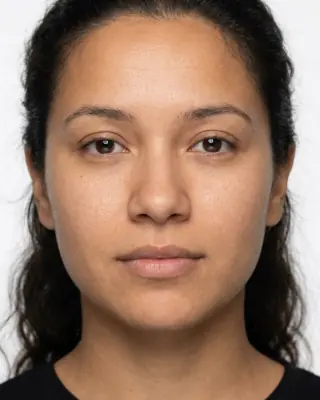
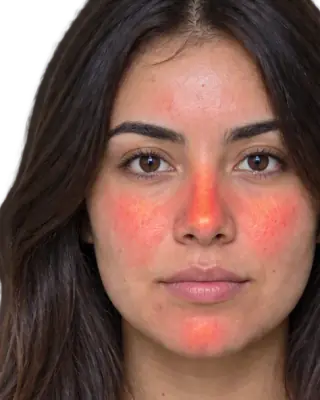
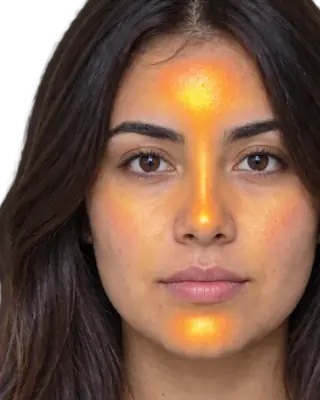
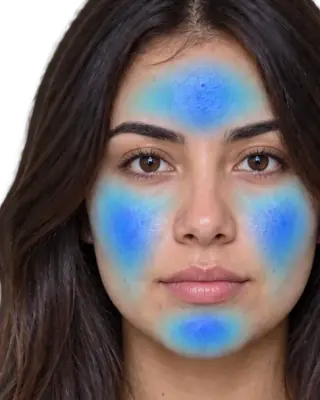
What you unlock in the app
- Full face analysisProportions, symmetry and skin, measured from one selfie
- Full skin report cardSee what's good and what needs work, from acne to skin age
- Heatmaps of your faceSee exactly where redness, oil and breakouts are
- Flare, your AI skin coachAsk anything, get answers based on your own face
- Morning and night routineMade for you, and it changes as you improve
- Ingredient scannerKnow if a product suits you before you buy it
- Progress trackingSee your before and after, week by week
FAQ
Common questions
What is the average PSL score?+
Four. The scale is built around 4 as the average person, and most real faces measure between 3 and 5.
What do LTN, MTN and HTN stand for?+
Low, mid and high tier normie, covering roughly 5 to 5.9, 6 to 6.9 and 7 to 7.9. Chadlite is used for the same band as HTN, and Chad for 8.
What does sub-5 mean?+
Any score below 5, so it includes the average band of 4 to 4.9 and everything under it, which on a curve centred on 4 is a large share of ordinary faces. It is used as an insult online, and most low readings from photo tools come from lens distance, head tilt and lighting.
Is the PSL scale scientific?+
No. It is a convention that developed on forums, and no study validates the tiers or the boundaries between them. Measured geometry such as symmetry and facial thirds is real and repeatable; the scale those numbers get mapped onto is not.
Can you raise your PSL score?+
Not the geometry, short of surgery. What changes how people actually rate a face is skin, body fat, hair, grooming and posture, none of which the scale measures.