
Free guide · no signup
Pimple between your eyebrows: what it usually means
Spots between the eyebrows come from the oiliest patch on the forehead plus brow gels, pencils, sweat, glasses bridges, and tweezing or waxing folliculitis, not from your liver. Post-grooming pustules appear within a day or two of plucking or waxing, each centered on a hair. If the area is red and flaky rather than spotty, it is seborrheic dermatitis, which favors exactly this spot and needs a different treatment.
CostFree
Read3 min
SignupNone
VerdictOil and products
Verdict
Oil and productsOil, brow products, and plucking, not your liver
Check your acne: Acne type quiz →What usually causes breakouts here
The glabella, the patch of skin between the brows, sits at the top of the T-zone and has some of the most active oil glands on the forehead. It also sweats readily and is a spot people touch without noticing, rubbing the bridge of the nose or resting a finger there while concentrating. Sunglasses and glasses bridges, hats, and fringes add occlusion.
Brow grooming is the other big contributor. Tweezing and waxing pull hairs from follicles that then get inflamed or infected, producing small pustules right in the brows and the strip between them. Brow gels, pencils, tinted waxes, and lamination products are applied daily and often not fully removed. Heavy skincare that pools in the area, and sunscreen that is not washed off at night, complete the list.
What face mapping claims, and what the evidence says
Face mapping usually assigns the area between the eyebrows to the liver, with breakouts there blamed on alcohol, rich food, late nights, or "toxins". The chart derives from traditional Chinese medicine, where this region was read as a reflection of the liver and its associated emotions, and it is repeated in skincare content as settled fact.
No clinical evidence links a spot between the brows to liver function. Alcohol and poor sleep can worsen skin overall, but they do not select one square inch of forehead. What the evidence supports is oil, sweat, and follicle irritation from grooming and products, all of which you can inspect directly. If a spot appears between your brows the week after a brow appointment, the explanation is not your liver.
How to tell what kind of spot it is
Ordinary acne here is usually a single inflamed papule or pustule, or a cluster of closed comedones giving the area a bumpy texture. Post-grooming folliculitis looks like several small pustules each centered on a hair follicle, appearing within a day or two of tweezing or waxing, and often slightly itchy. An ingrown brow hair shows as a firm bump with a hair curled visibly beneath the surface.
Not everything here is acne. Small, firm, pearly bumps that do not change for months are more likely milia or sebaceous hyperplasia, which are harmless and do not respond to acne treatment. A red, flaky patch between the brows that comes and goes is often seborrheic dermatitis, which likes exactly this spot, and which needs a different approach entirely. If the area is more scaly than spotty, that is the direction to look.
What actually helps
Remove brow products fully at night with a proper cleanse. Clean tweezers with alcohol before use and go easy on the area afterward: no heavy creams on freshly plucked skin. If waxing reliably triggers pustules, try threading or tweezing instead and space appointments further apart. Wipe glasses and sunglasses bridges. Blot sweat rather than letting it sit through a workout.
Tonight, remove brow products fully, clean your tweezers with alcohol, and keep heavy creams off freshly plucked skin. Wipe glasses bridges and blot sweat during workouts. Use a salicylic acid cleanser or a little adapalene for a few weeks; keep benzoyl peroxide off the brow hairs, which it lightens. The acne type quiz sorts hormonal, comedonal, and inflammatory acne from your description; a flaky red patch falls outside it and gets an anti-dandruff wash as a short mask. Spots that fit none of these go to a clinician.
Measure it on your own photo
- Acne type quizHormonal, fungal, comedonal, or inflammatory — they need different approaches.
- See where your breakouts actually clusterRedness, tone evenness, shine and depth from one selfie, scored in your browser.
- Is it fungal acne? Check the ingredientsPaste an ingredient list and see which ingredients feed malassezia, the yeast behind fungal acne.
Start your glow up
SkinPal on iPhone and Android
Next step · SkinPal app
Finally know what your skin needs.
No more guessing, no more wasted products. Take one selfie. SkinPal shows what's going on with your skin and gives you a simple plan to improve it.
What you unlock in the app
- Full face analysisProportions, symmetry and skin, measured from one selfie
- Full skin report cardSee what's good and what needs work, from acne to skin age
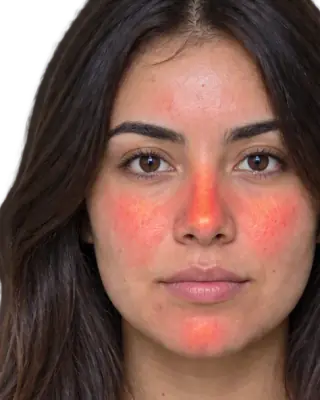
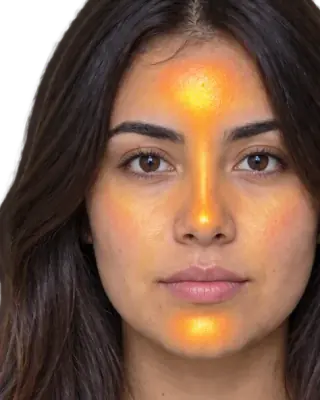
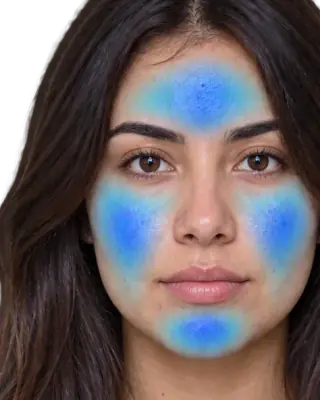
- Heatmaps of your faceSee exactly where redness, oil and breakouts are
- Flare, your AI skin coachAsk anything, get answers based on your own face
- Morning and night routineMade for you, and it changes as you improve
- Ingredient scannerKnow if a product suits you before you buy it
- Progress trackingSee your before and after, week by week
FAQ
Common questions
Why do I keep getting a pimple between my eyebrows?+
Because it is one of the oiliest points on the forehead and also gets brow products, sweat, glasses bridges, and fingers. Check whether spots follow brow grooming or a new brow product. Removing the trigger and adding a salicylic acid cleanser usually settles it within weeks.
Does a pimple between the eyebrows mean liver problems?+
No. That claim comes from traditional face mapping and has no clinical evidence. If you are concerned about your liver, that is a conversation for a doctor and a blood test, not a mirror.
Can plucking or waxing eyebrows cause pimples?+
Yes. Pulling hairs can inflame or infect the follicle, producing small pustules within a day or two. Clean tools, gentle aftercare, and avoiding heavy products on freshly groomed skin reduce it. If waxing reliably causes it, threading is gentler for some people.
Why is the skin between my eyebrows red and flaky?+
That pattern is more typical of seborrheic dermatitis than acne. It favors the brows, sides of the nose, and hairline, and it comes and goes. An anti-dandruff wash used briefly on the area is the usual first step; a clinician can confirm and prescribe if it persists.